Category: Boats & Launches

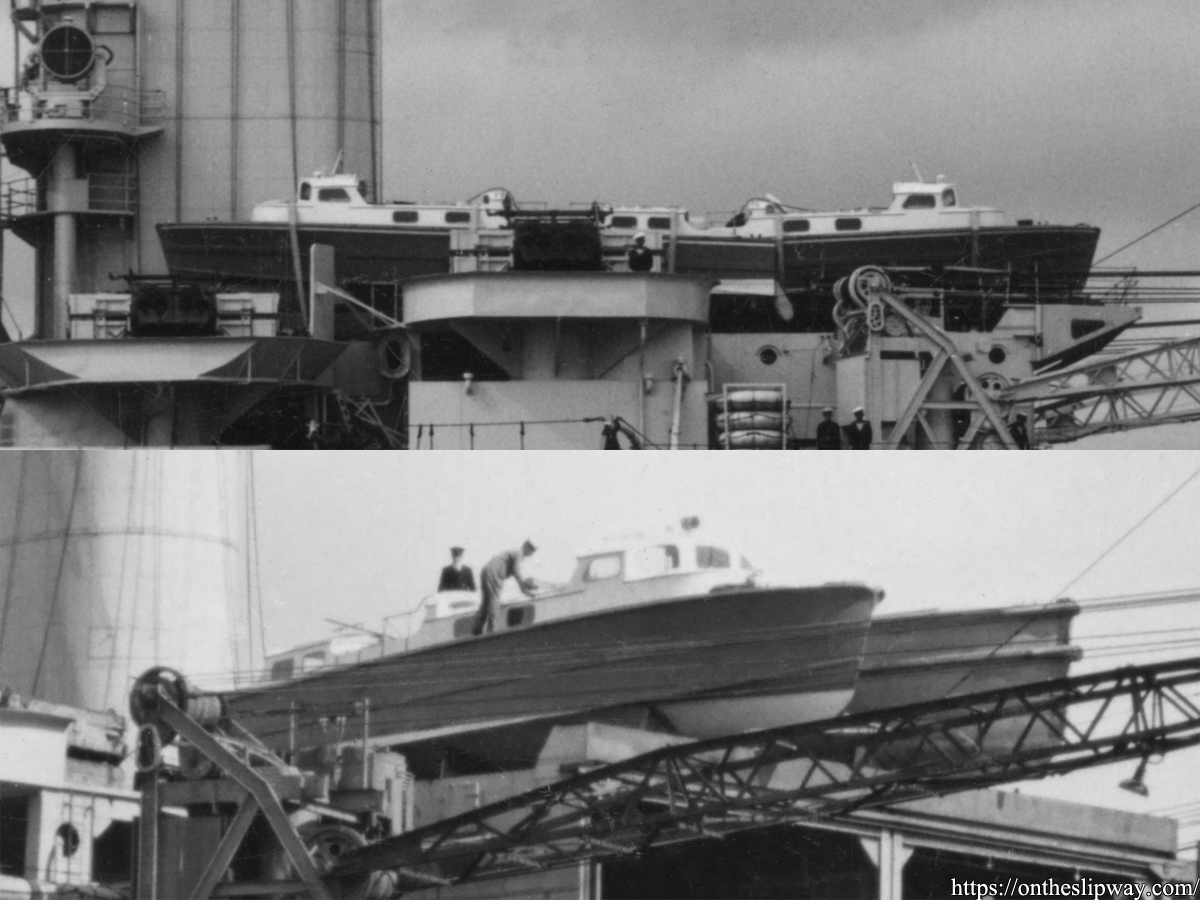
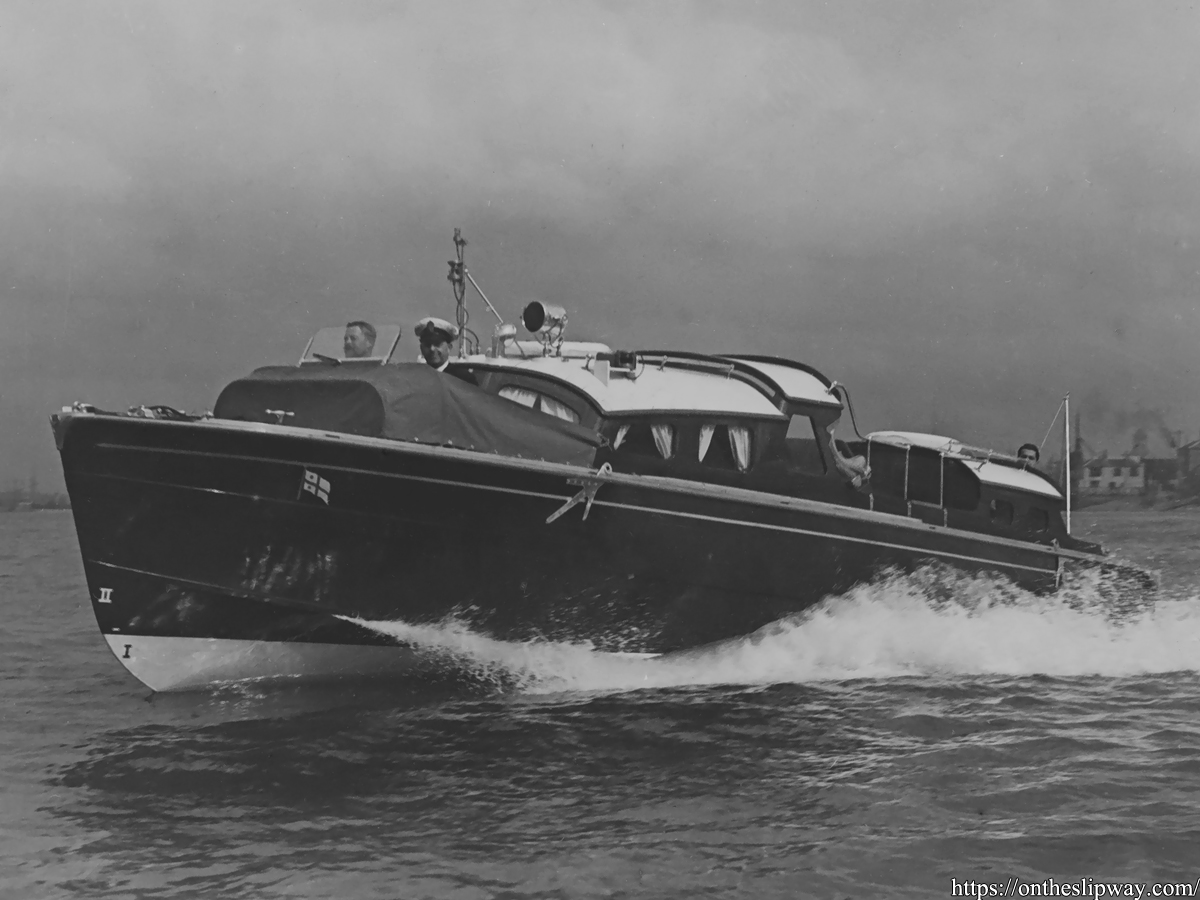
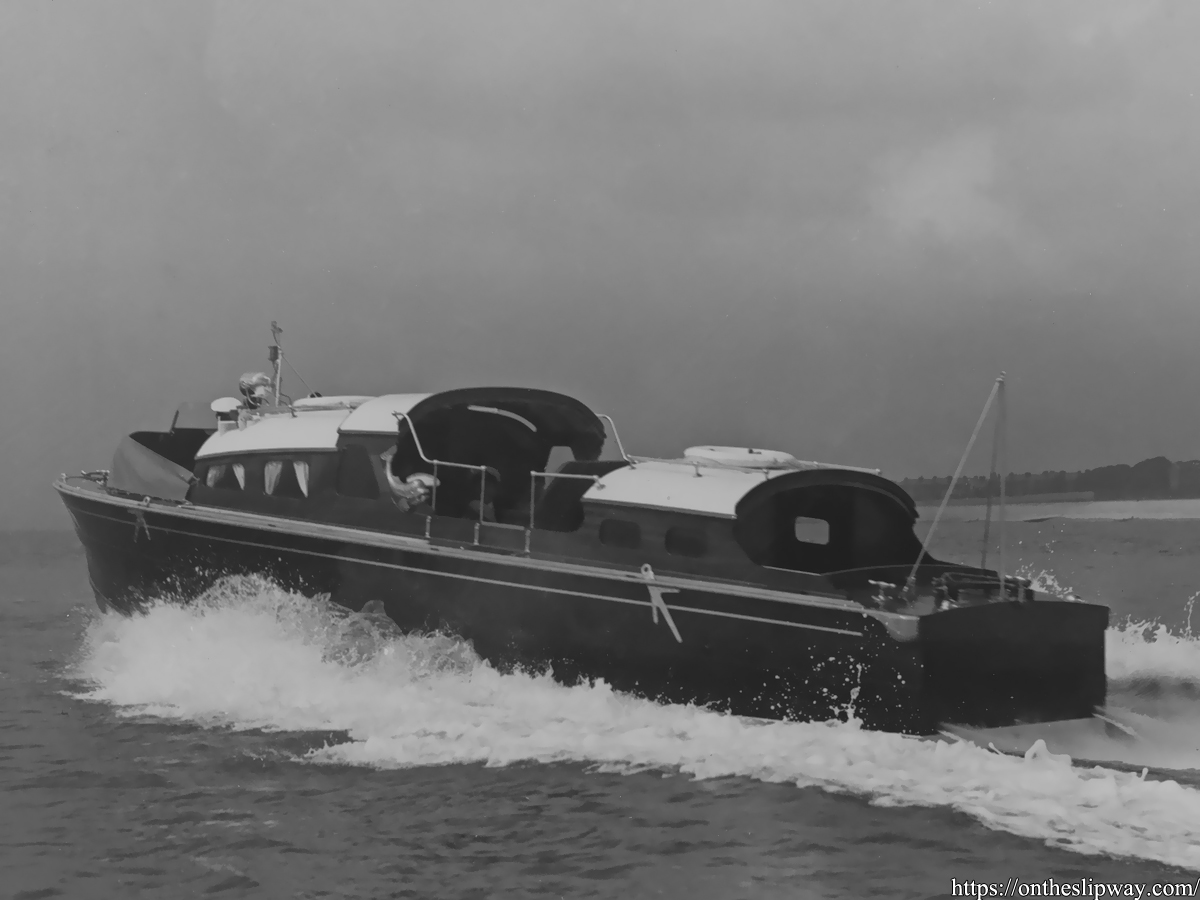
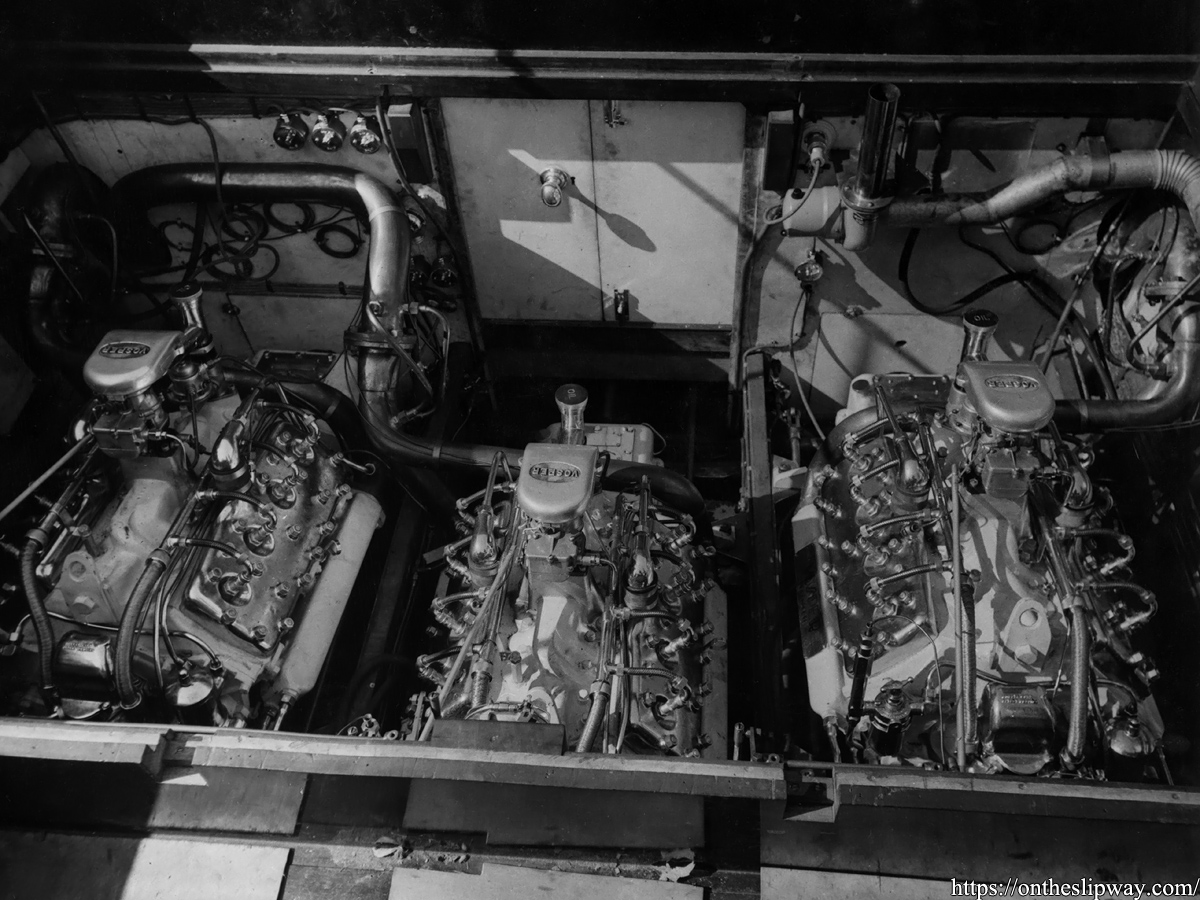
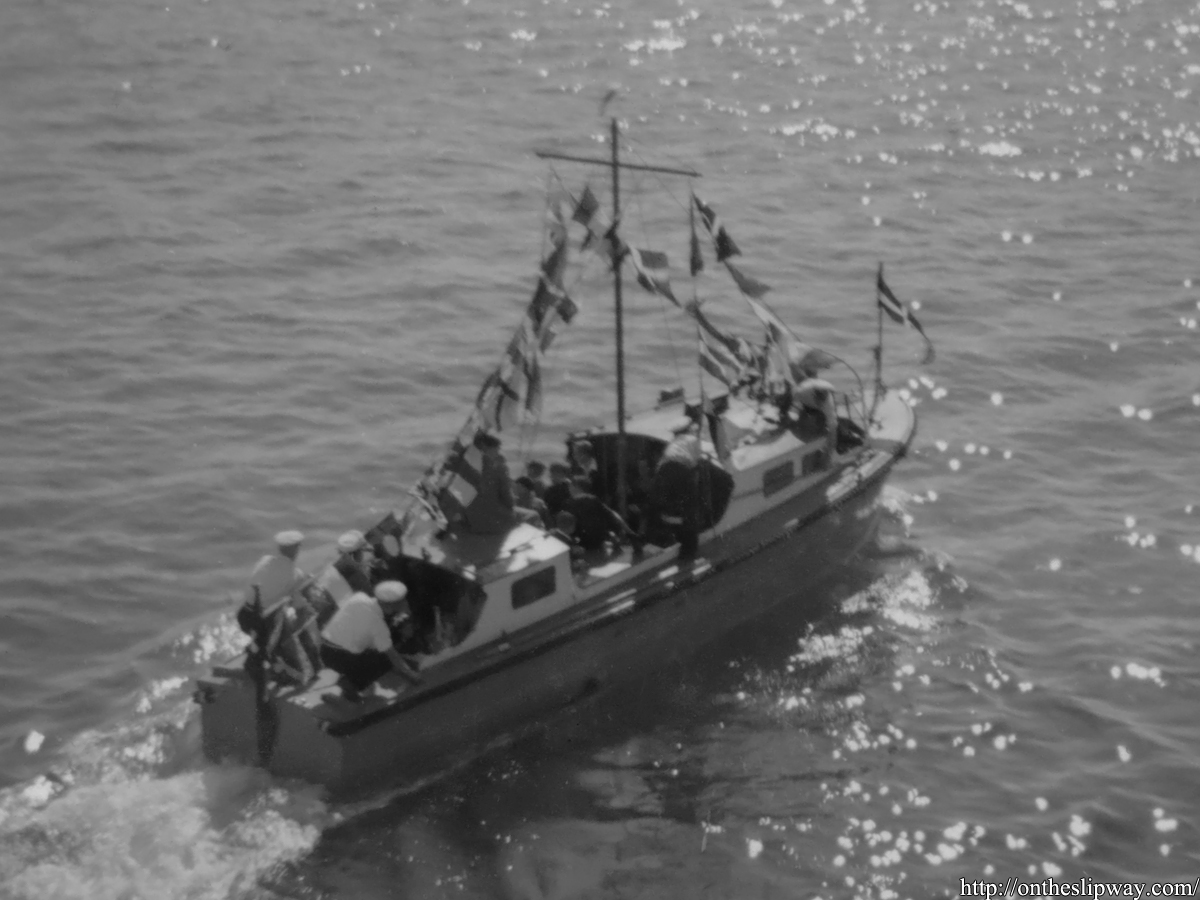
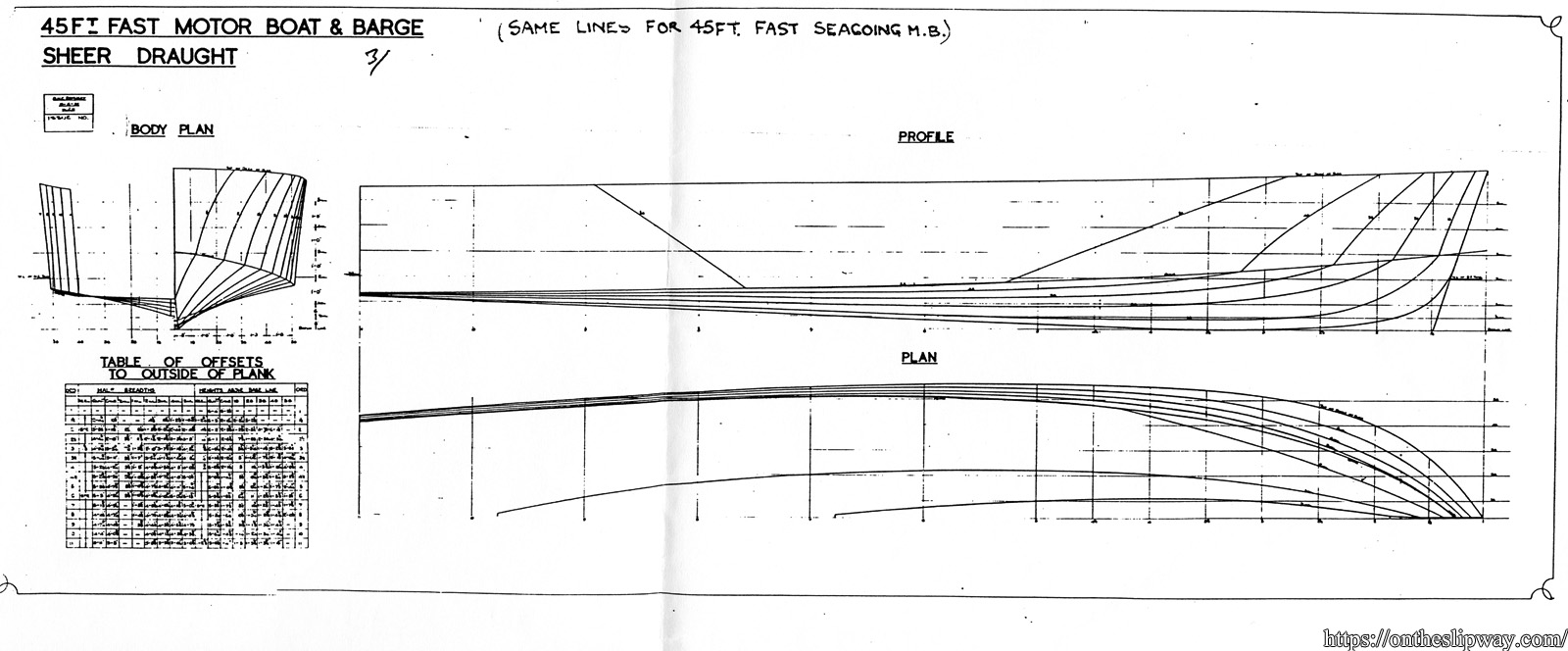
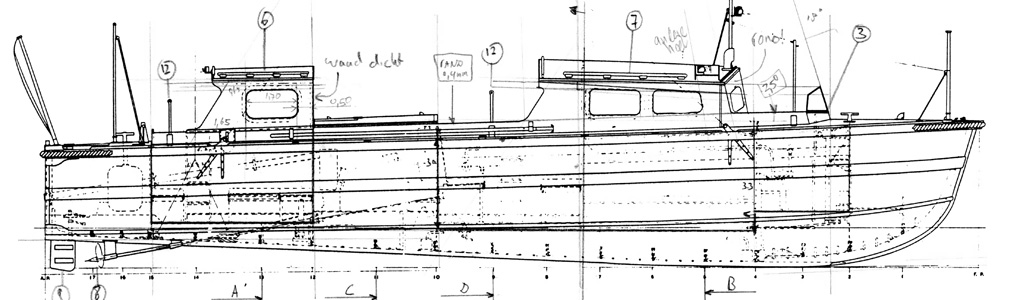
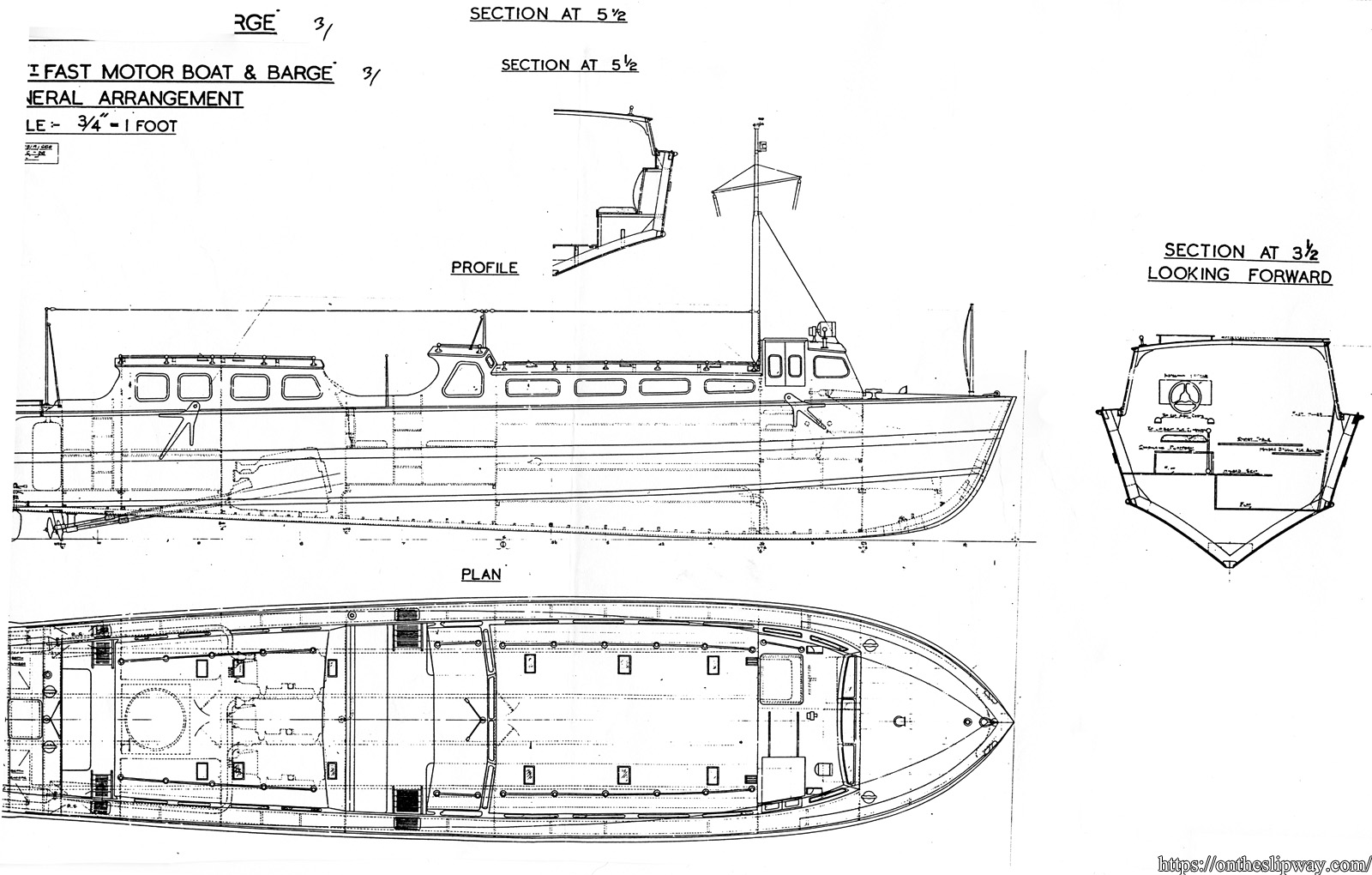
45 ft Fast Motor Boat & Barge

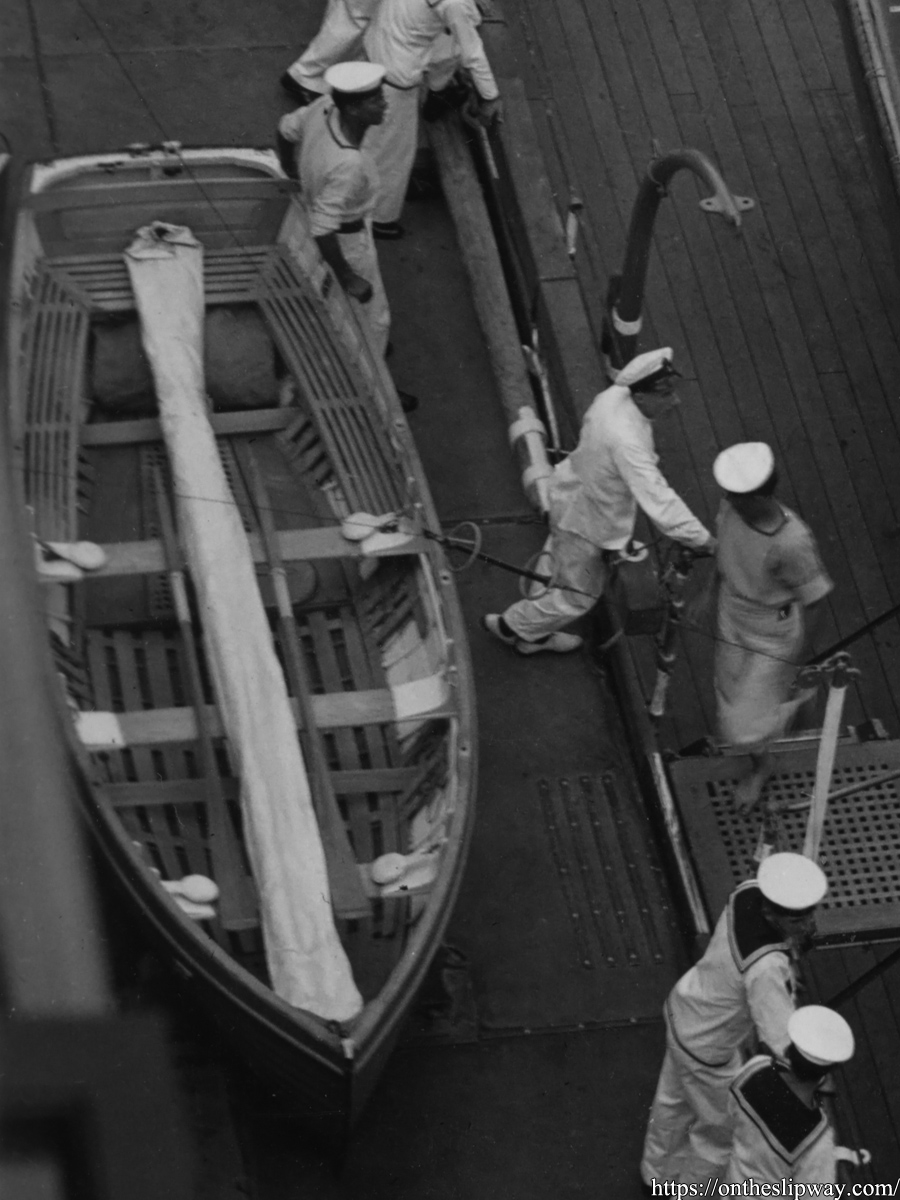
ON BOARD HMS KING GEORGE V. 1941, SCENES ON BOARD THE BATTLESHIP.
ON BOARD HMS KING GEORGE V. 1941, SCENES ON BOARD THE BATTLESHIP. © IWM (A 3438)

CHIEF OF COASTAL COMMAND VISITS THE FLAGSHIP OF THE HOME FLEET. 9 APRIL 1943, SCAPA FLOW, AIR MARSHAL J C SLESSOR COMMANDER IN CHIEF COASTAL COMMAND, VISITED HMS KING GEORGE V, THE FLAGSHIP OF THE HOME FLEET.
CHIEF OF COASTAL COMMAND VISITS THE FLAGSHIP OF THE HOME FLEET. 9 APRIL 1943, SCAPA FLOW, AIR MARSHAL J C SLESSOR COMMANDER IN CHIEF COASTAL COMMAND, VISITED HMS KING GEORGE V, THE FLAGSHIP OF THE HOME FLEET. © IWM (A 15917)

COMBINED BRITISH AND AMERICAN NAVAL FORCE PROTECT NORTHERN CONVOYS. JUNE 1943, ON BOARD HMS DUKE OF YORK.
COMBINED BRITISH AND AMERICAN NAVAL FORCE PROTECT NORTHERN CONVOYS. JUNE 1943, ON BOARD HMS DUKE OF YORK. © IWM (A 17574)

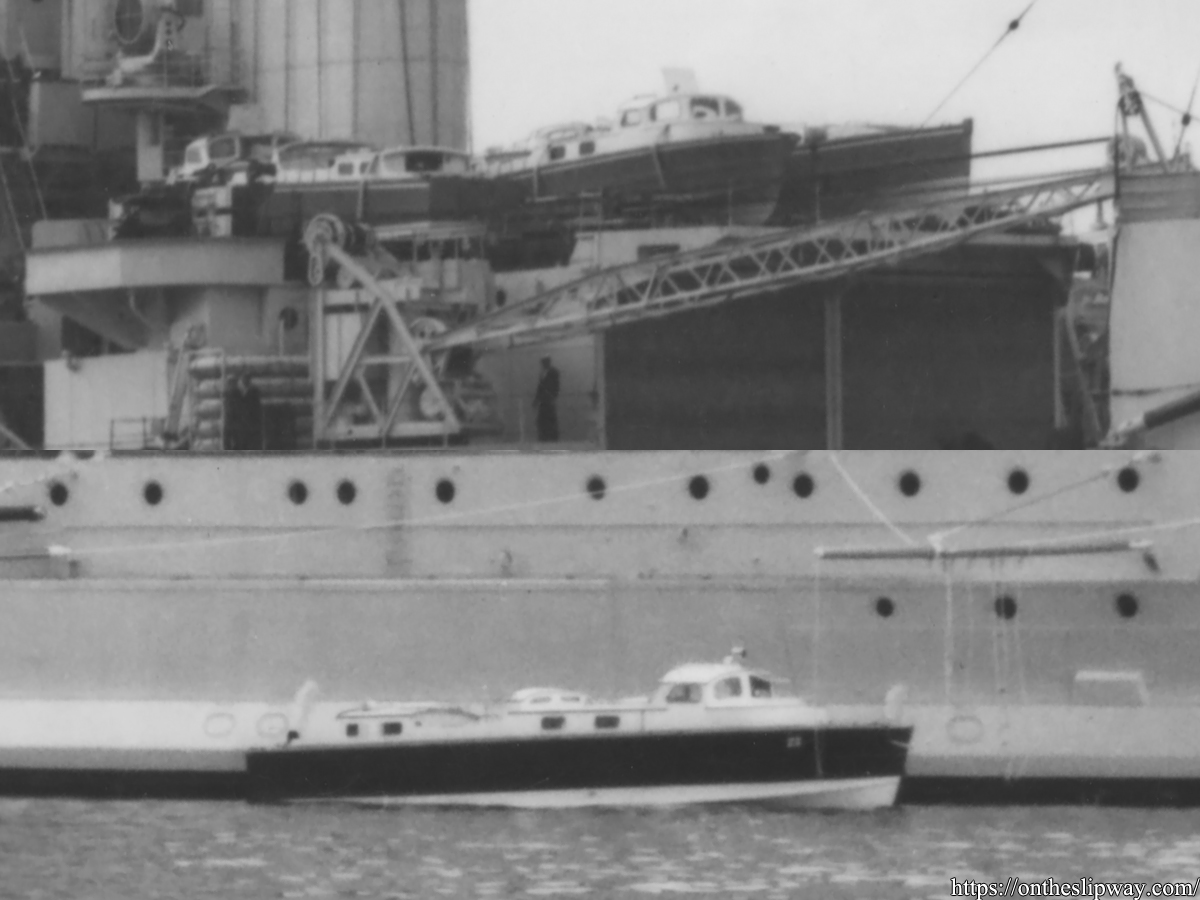
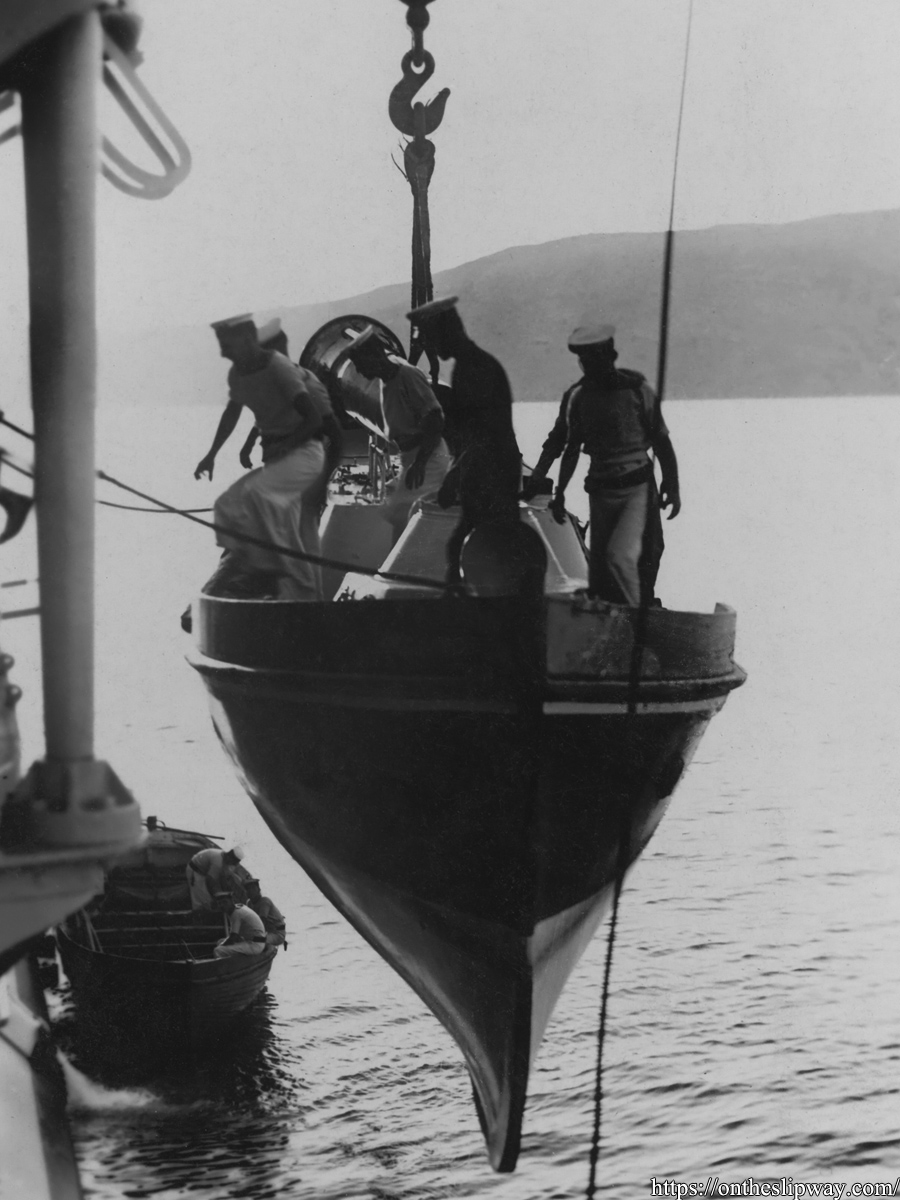
THE KING WITH THE HOME FLEET. 16 AUGUST 1943, SCAPA FLOW. THE KING VISITED MEN AND SHIPS OF THE HOME FLEET, HE WENT ABOARD THE FLOTILLA LEADER HMS ONSLOW WHICH TOOK HIM TO THE FLAGSHIP HMS DUKE OF YORK, WHERE HE WAS MET BY ADMIRAL SIR BRUCE FRASER, KBE, CB, C-IN-C HOME FLEET.
THE KING WITH THE HOME FLEET. 16 AUGUST 1943, SCAPA FLOW. THE KING VISITED MEN AND SHIPS OF THE HOME FLEET, HE WENT ABOARD THE FLOTILLA LEADER HMS ONSLOW WHICH TOOK HIM TO THE FLAGSHIP HMS DUKE OF YORK, WHERE HE WAS MET BY ADMIRAL SIR BRUCE FRASER, KBE, CB, C-IN-C HOME FLEET. © IWM (A 18619)

THE KING WITH THE HOME FLEET. 16 AUGUST 1943, SCAPA FLOW. THE KING VISITED MEN AND SHIPS OF THE HOME FLEET, HE WENT ABOARD THE FLOTILLA LEADER HMS ONSLOW WHICH TOOK HIM TO THE FLAGSHIP HMS DUKE OF YORK, WHERE HE WAS MET BY ADMIRAL SIR BRUCE FRASER, KBE, CB, C-IN-C HOME FLEET.
THE KING WITH THE HOME FLEET. 16 AUGUST 1943, SCAPA FLOW. THE KING VISITED MEN AND SHIPS OF THE HOME FLEET, HE WENT ABOARD THE FLOTILLA LEADER HMS ONSLOW WHICH TOOK HIM TO THE FLAGSHIP HMS DUKE OF YORK, WHERE HE WAS MET BY ADMIRAL SIR BRUCE FRASER, KBE, CB, C-IN-C HOME FLEET. © IWM (A 18620)

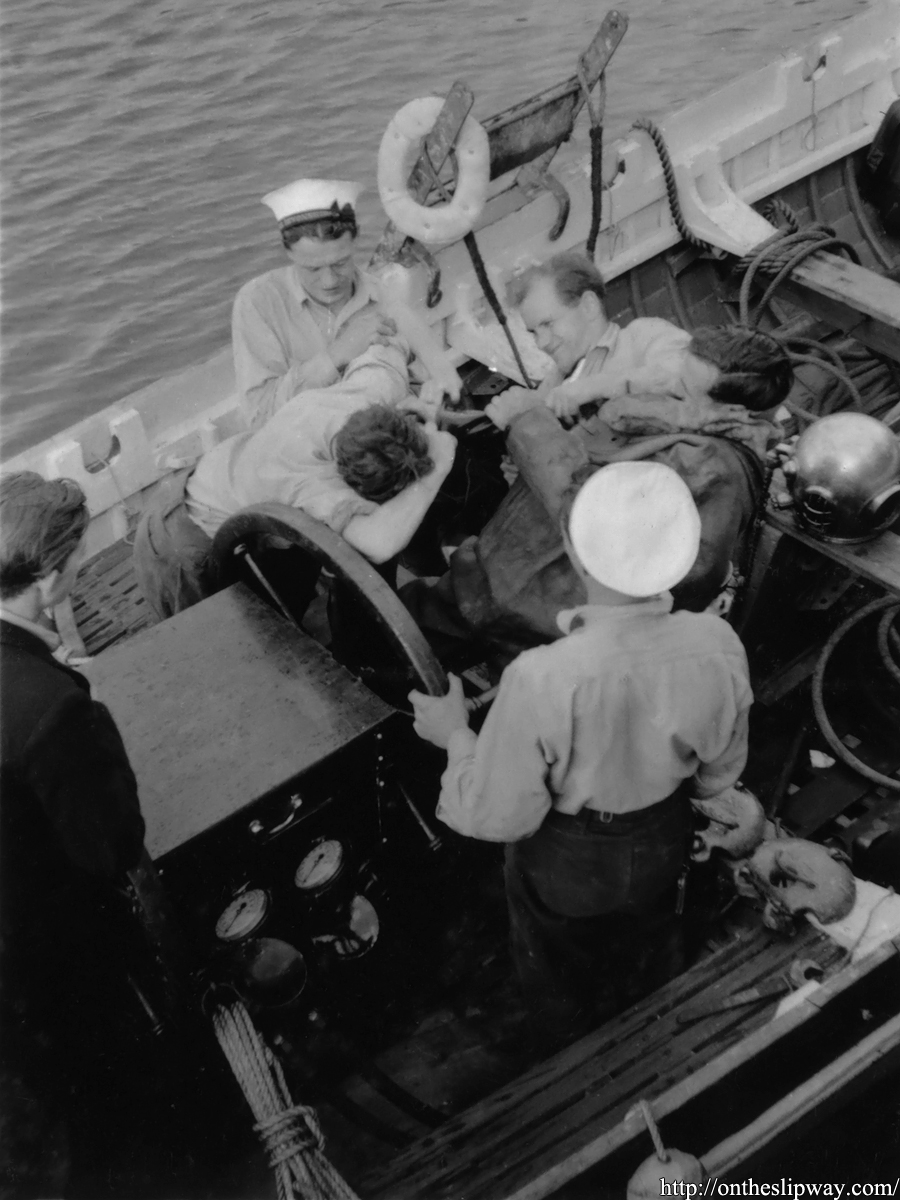
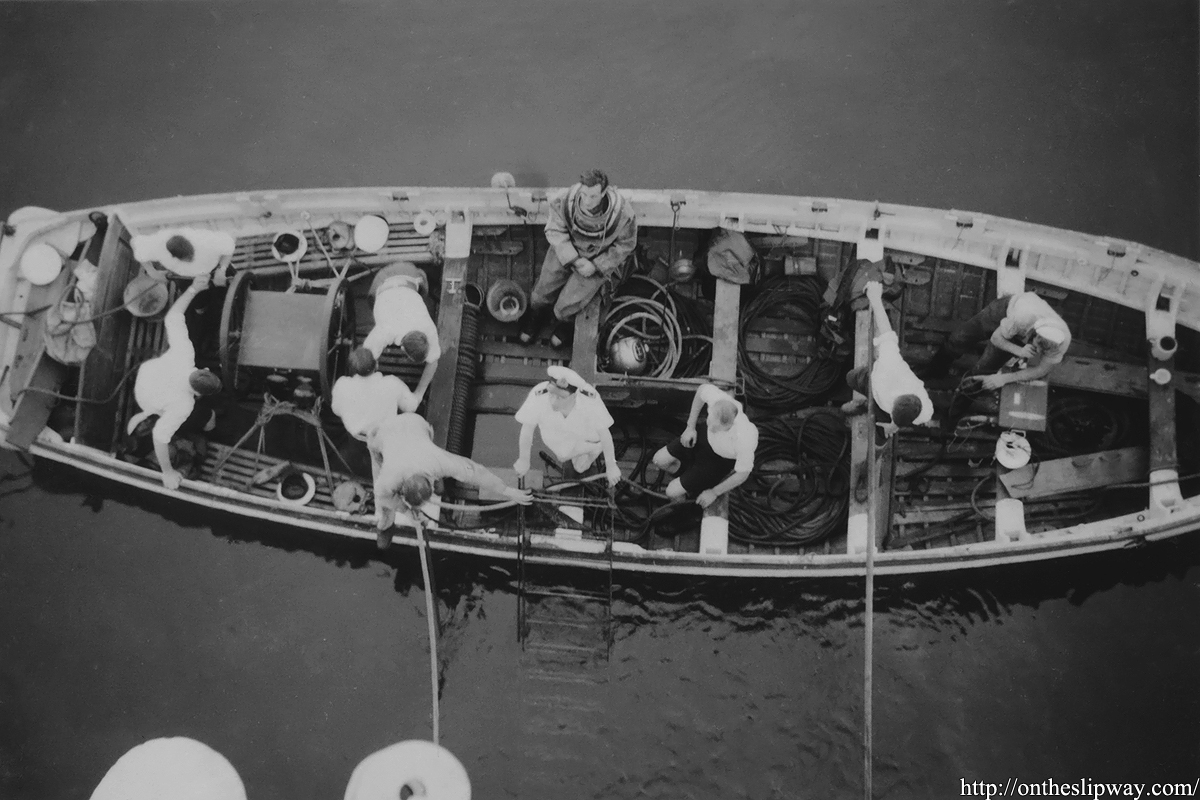
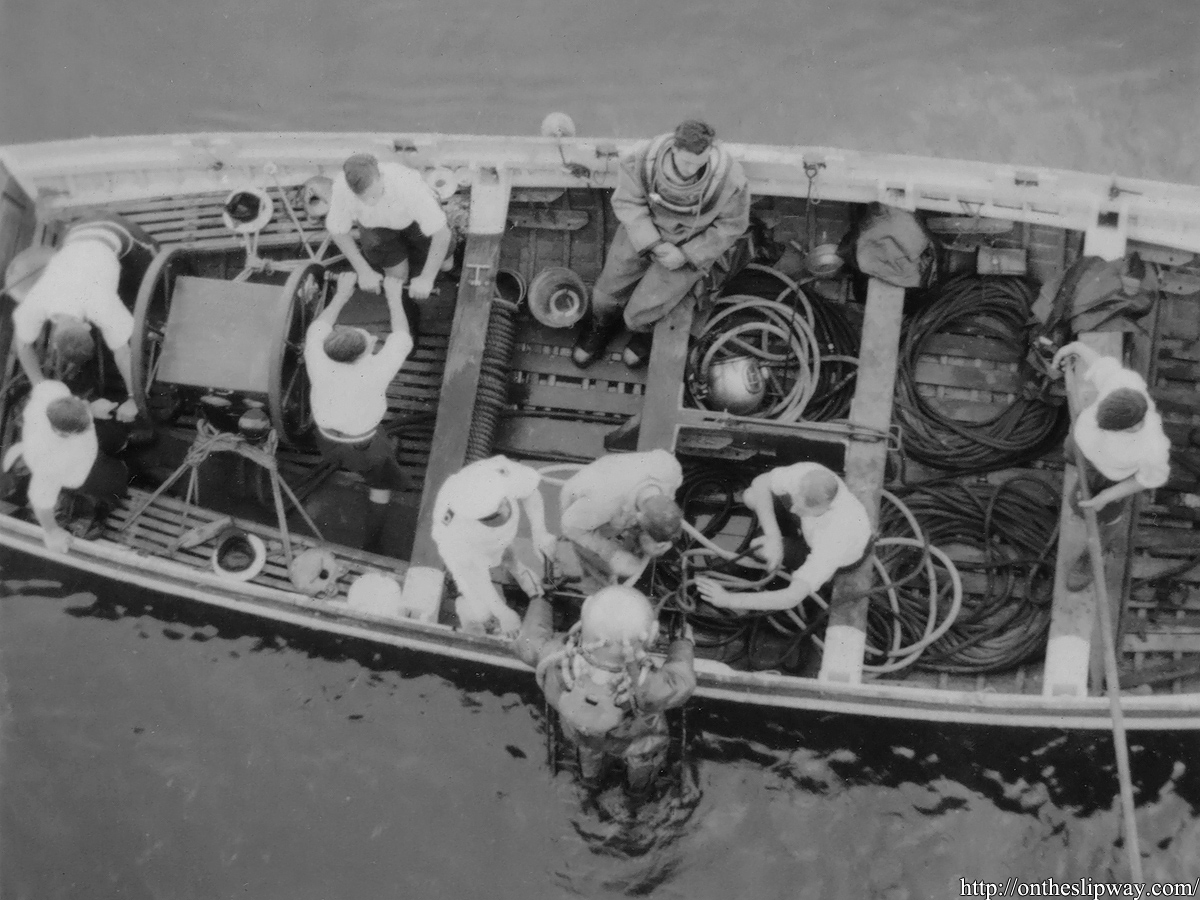
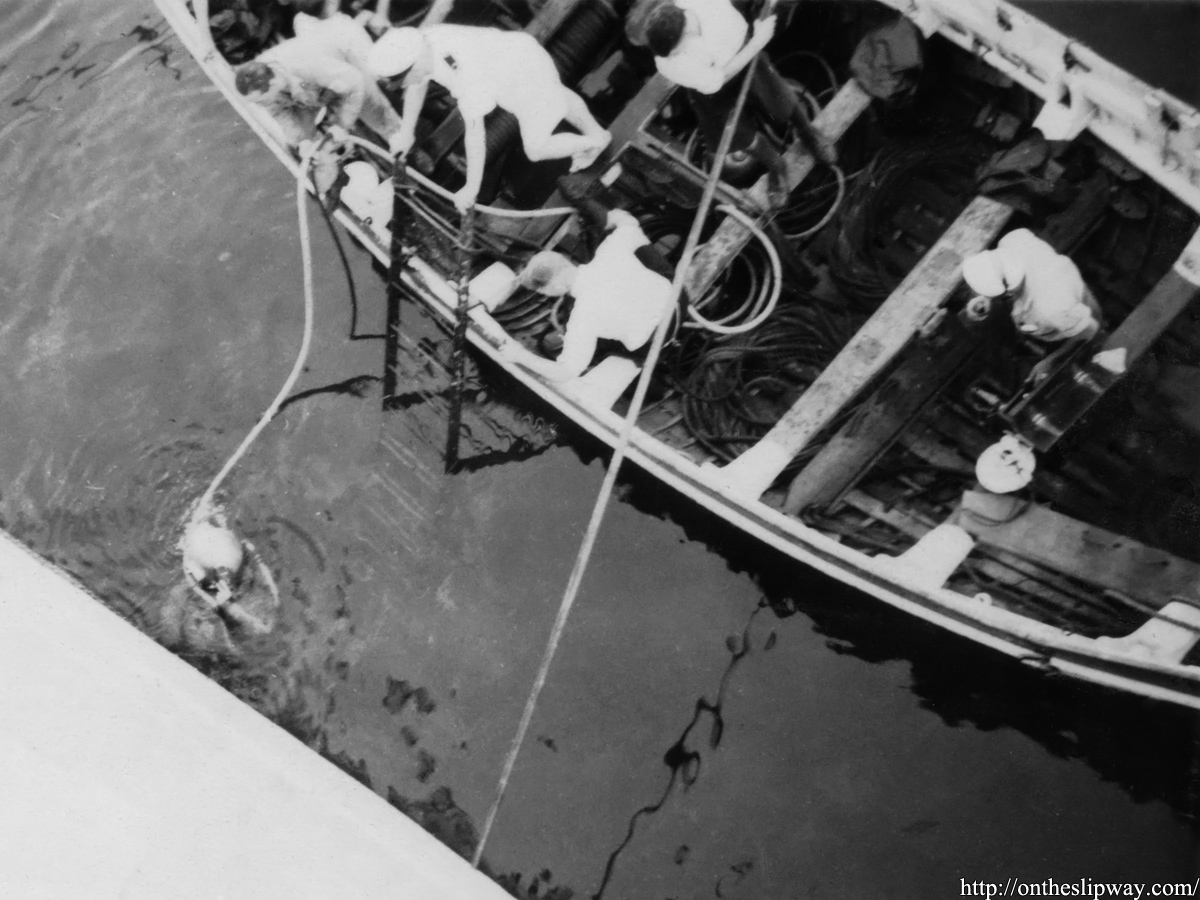
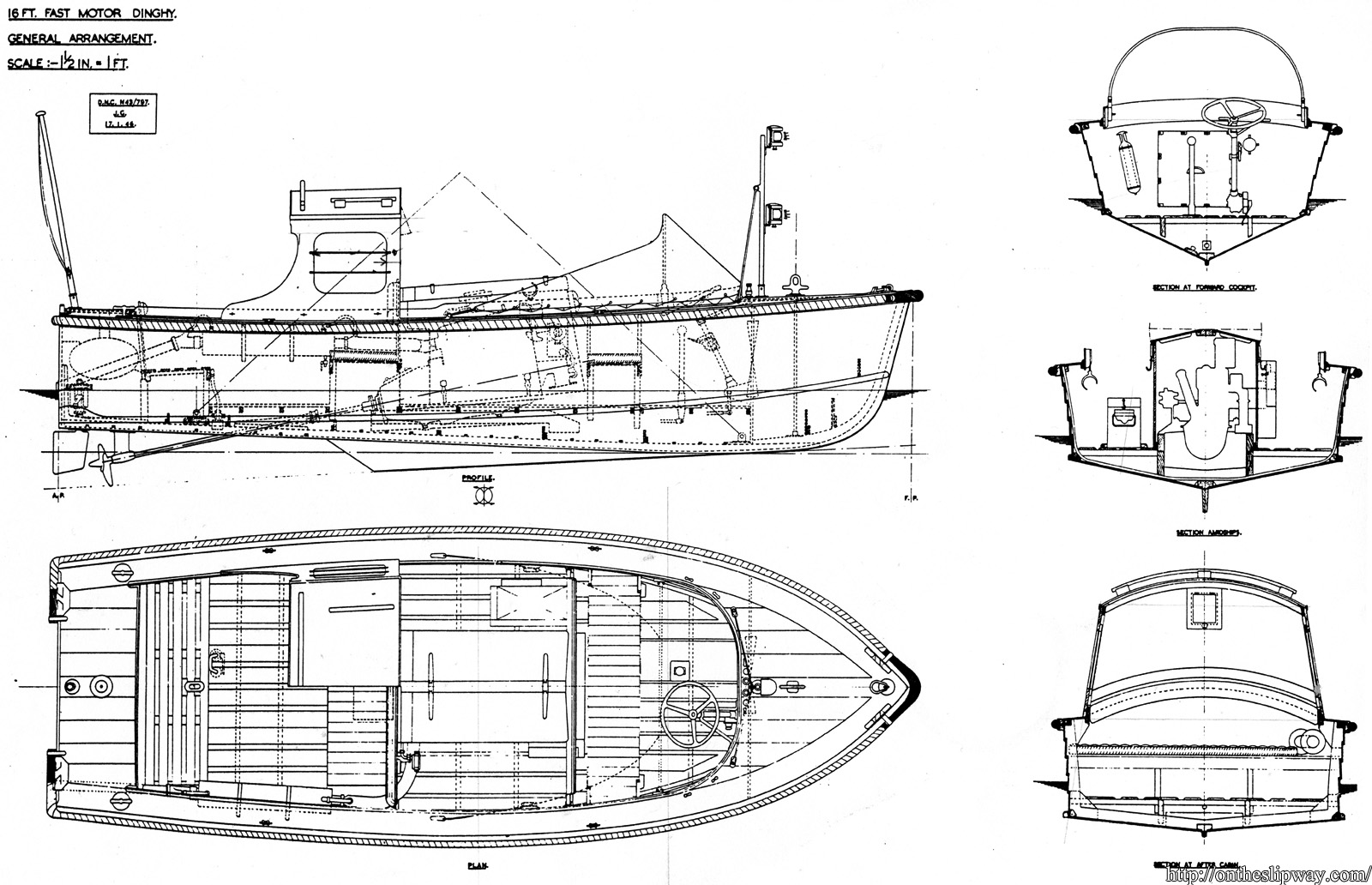
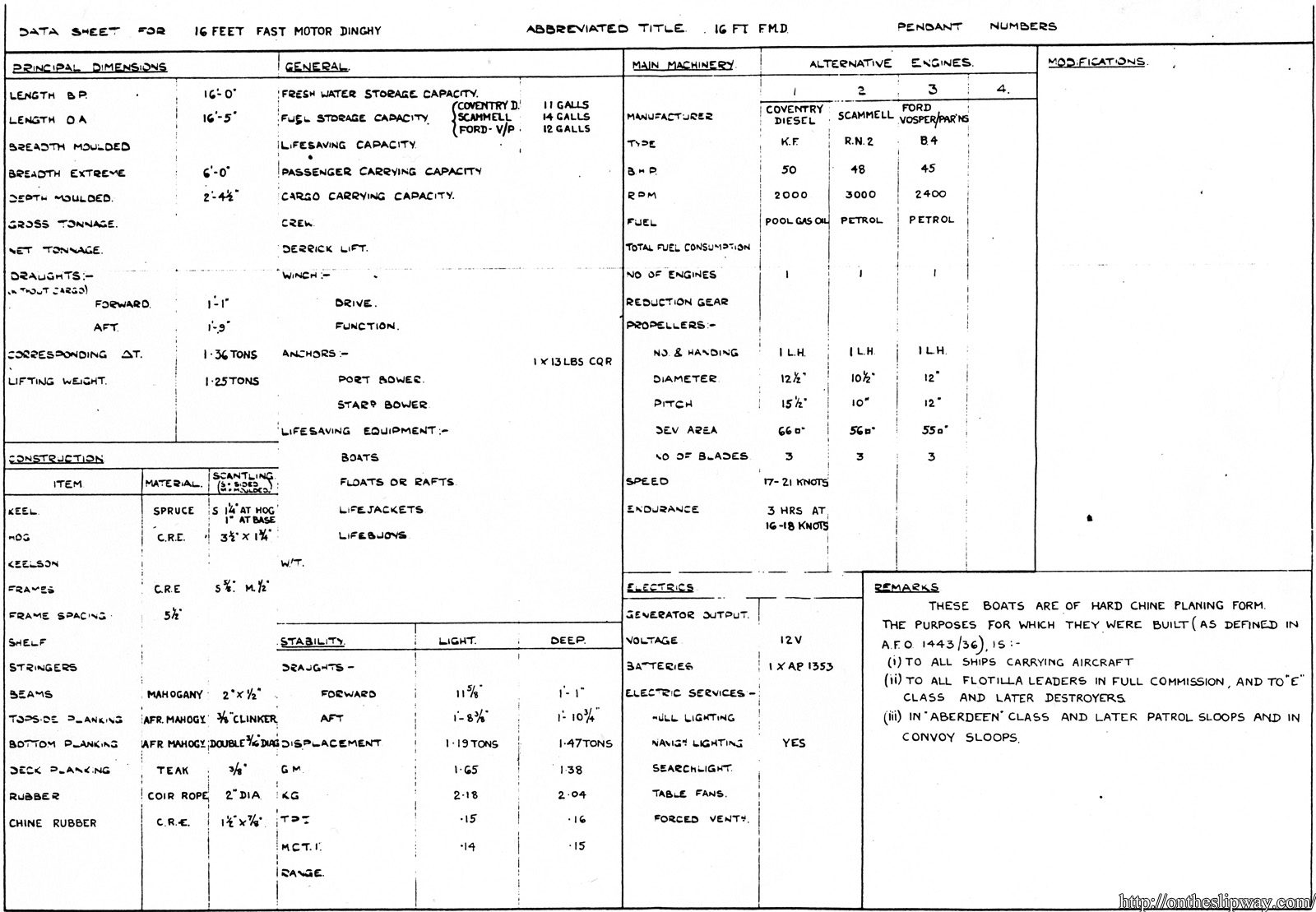
16 ft Fast Motor Boat

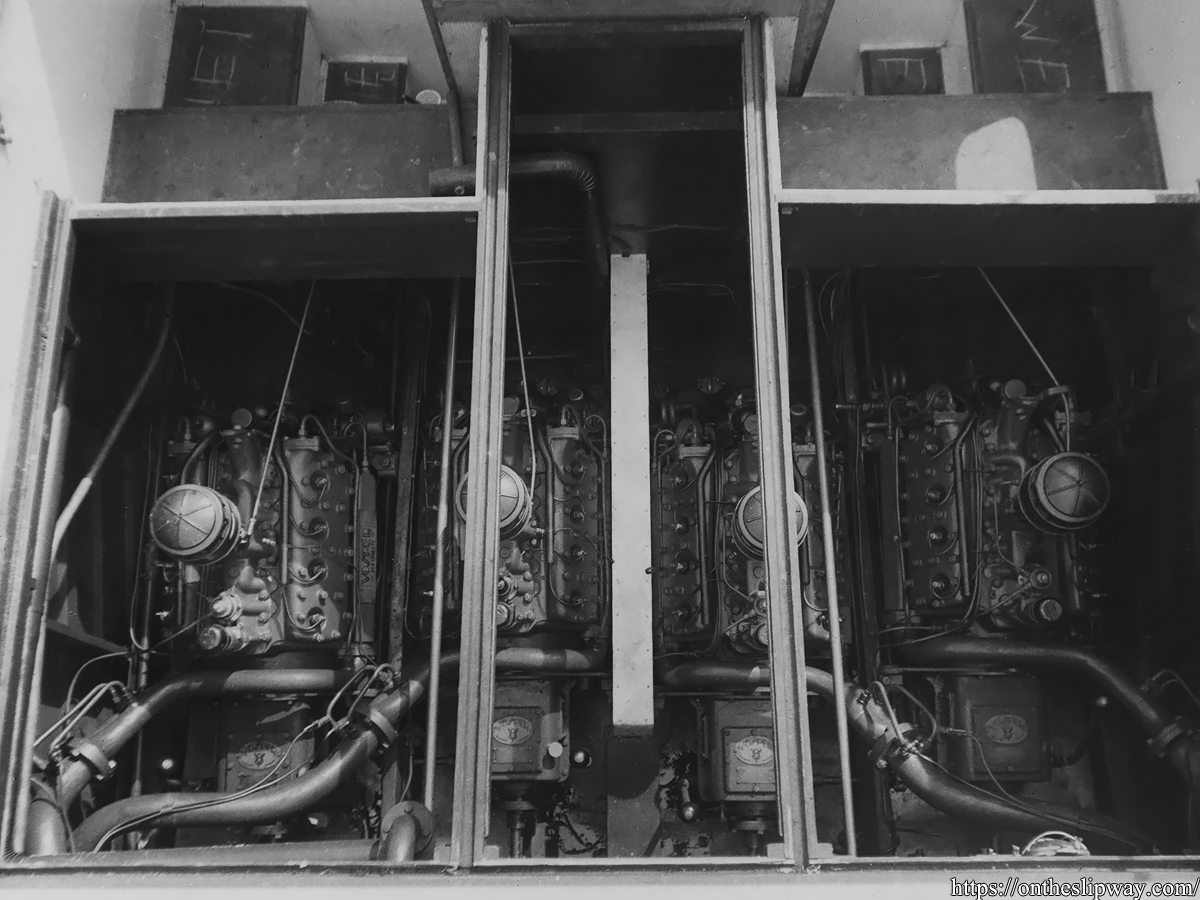
“The boats are of the hard chine planing form. The purposes for which they were built (as defined in A..F.O 1443/36 is:

  1. To all ships carrying aircraft
  2. To all flottilla leaders in full commission, and to “E” class and later destroyers
  3. in ‘Aberdeen’ class and later patrol sloops and in convoy sloops”

THE DESTROYER DEPOT SHIP HMS TYNE. SEPTEMBER 1941, ON BOARD THE DESTROYER DEPOT SHIP OF THE HOME FLEET HMS TYNE, HEADQUARTERS FOR THE DESTROYER MEN IN THE HOME FLEET. FROM HMS TYNE THE DESTROYER MEN OF THE DESTROYER FLOTILLAS OF THE FLEET ARE FED, CLOTHED, PAID, MEDICALLY ATTENDED, TRAINED AND ENTERTAINED. THE DEPOT SHIP IS ALSO THE FLAG SHIP FOR THE ADMIRAL OF DESTROYERS, REAR ADMIRAL L H K HAMILTON, RAD, DSO.
THE DESTROYER DEPOT SHIP HMS TYNE. SEPTEMBER 1941, ON BOARD THE DESTROYER DEPOT SHIP OF THE HOME FLEET HMS TYNE, HEADQUARTERS FOR THE DESTROYER MEN IN THE HOME FLEET. FROM HMS TYNE THE DESTROYER MEN OF THE DESTROYER FLOTILLAS OF THE FLEET ARE FED, CLOTHED, PAID, MEDICALLY ATTENDED, TRAINED AND ENTERTAINED. THE DEPOT SHIP IS ALSO THE FLAG SHIP FOR THE ADMIRAL OF DESTROYERS, REAR ADMIRAL L H K HAMILTON, RAD, DSO. © IWM (A 5499)

Ship’s Boats: change log

01/05/2026

– Initiated 16ft Dinghy page, added i image
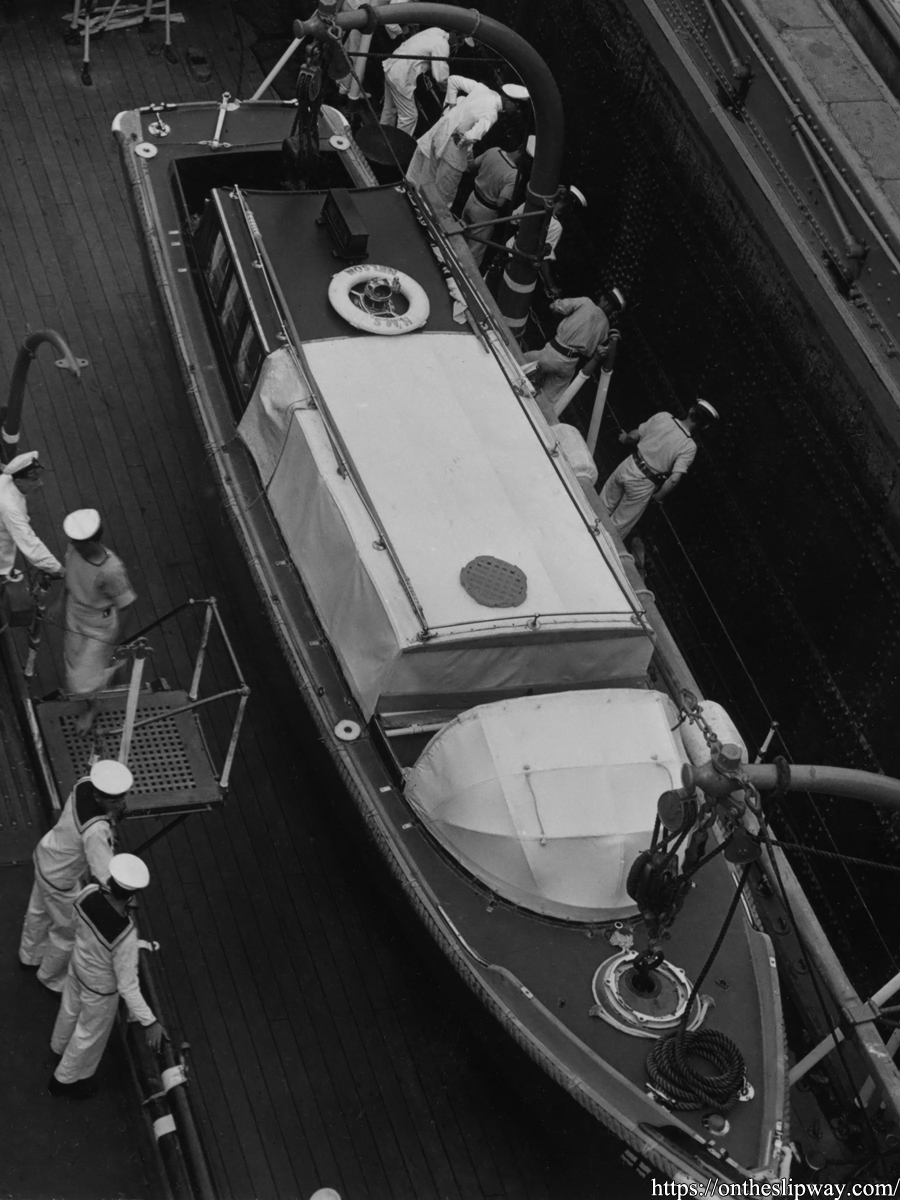
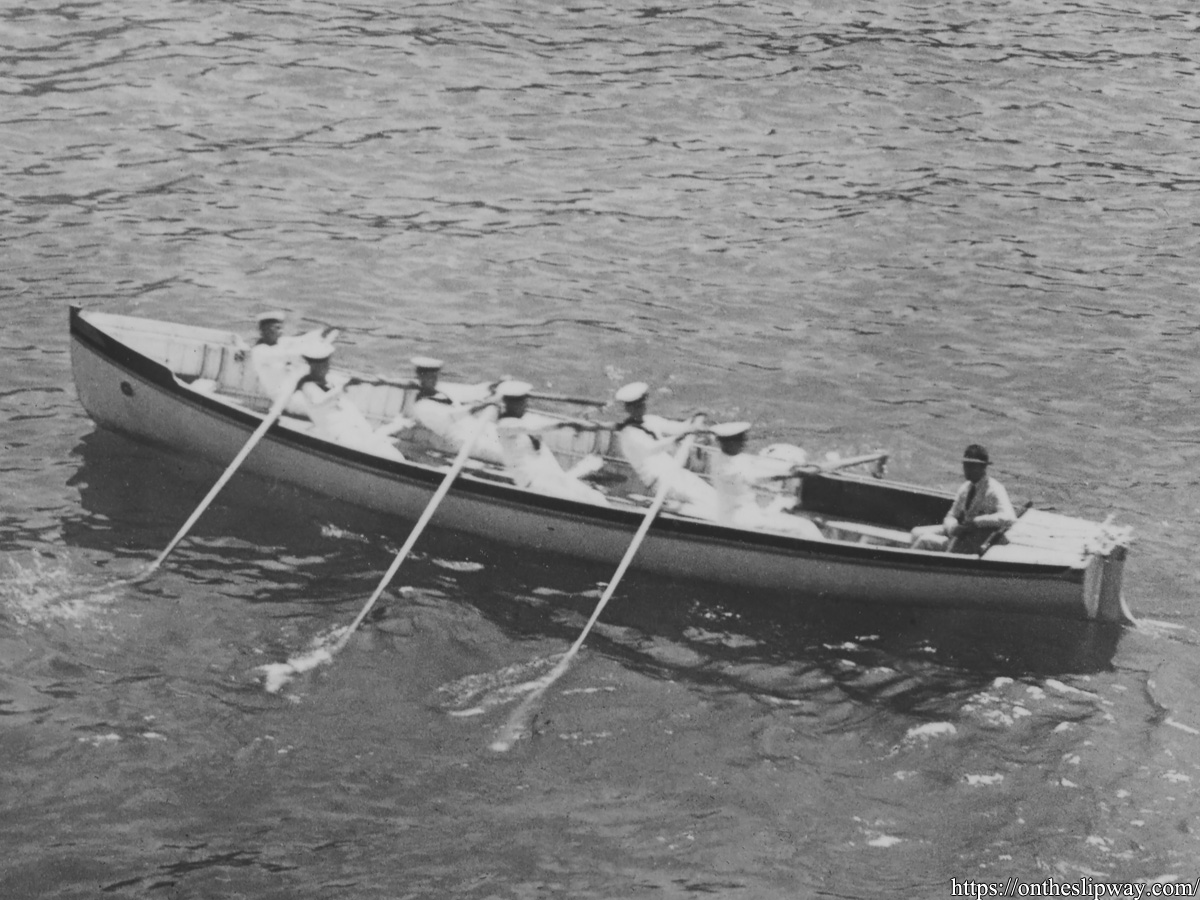
– Added 1 image of HMS Nelson’s 35ft Motor Pinnace

16/03/2025
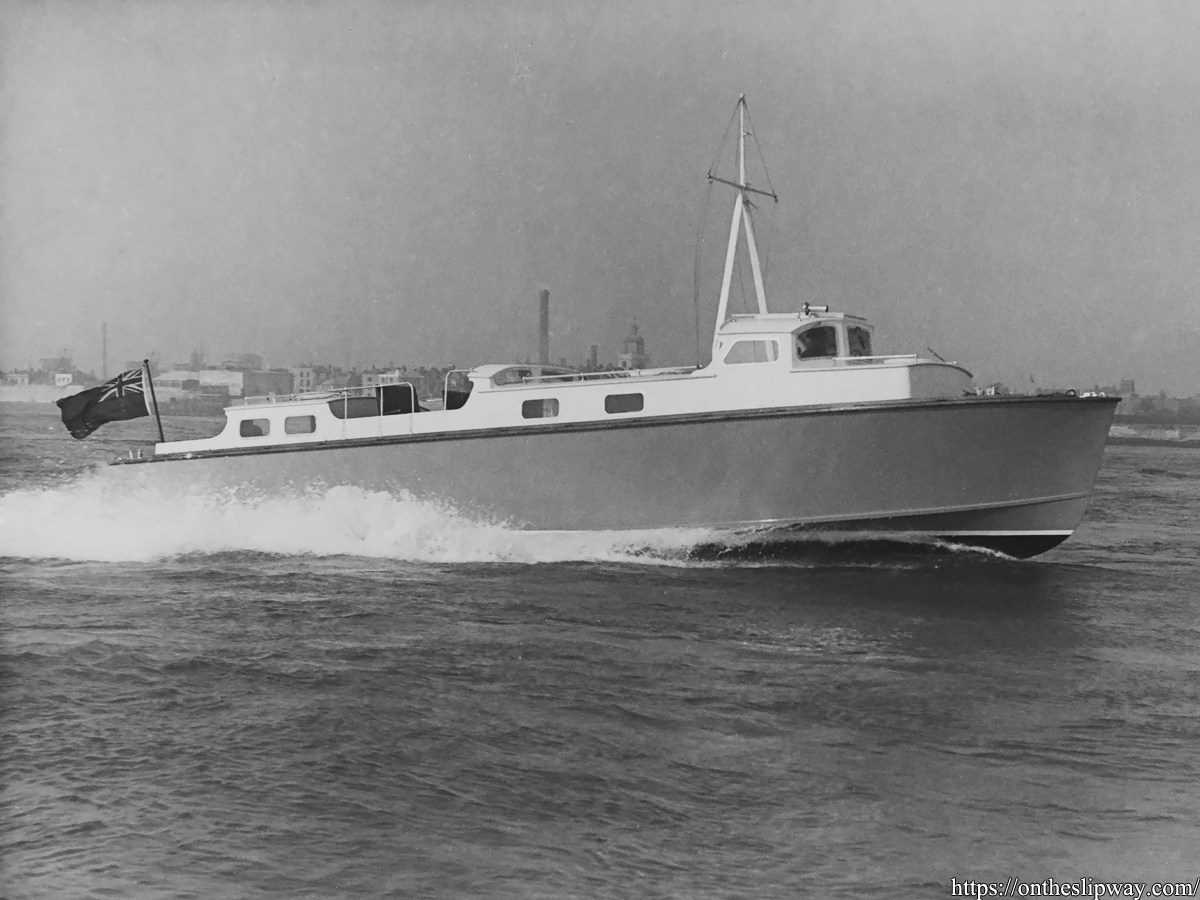


– Added 45ft Fast Motor Boats type III, 4 images
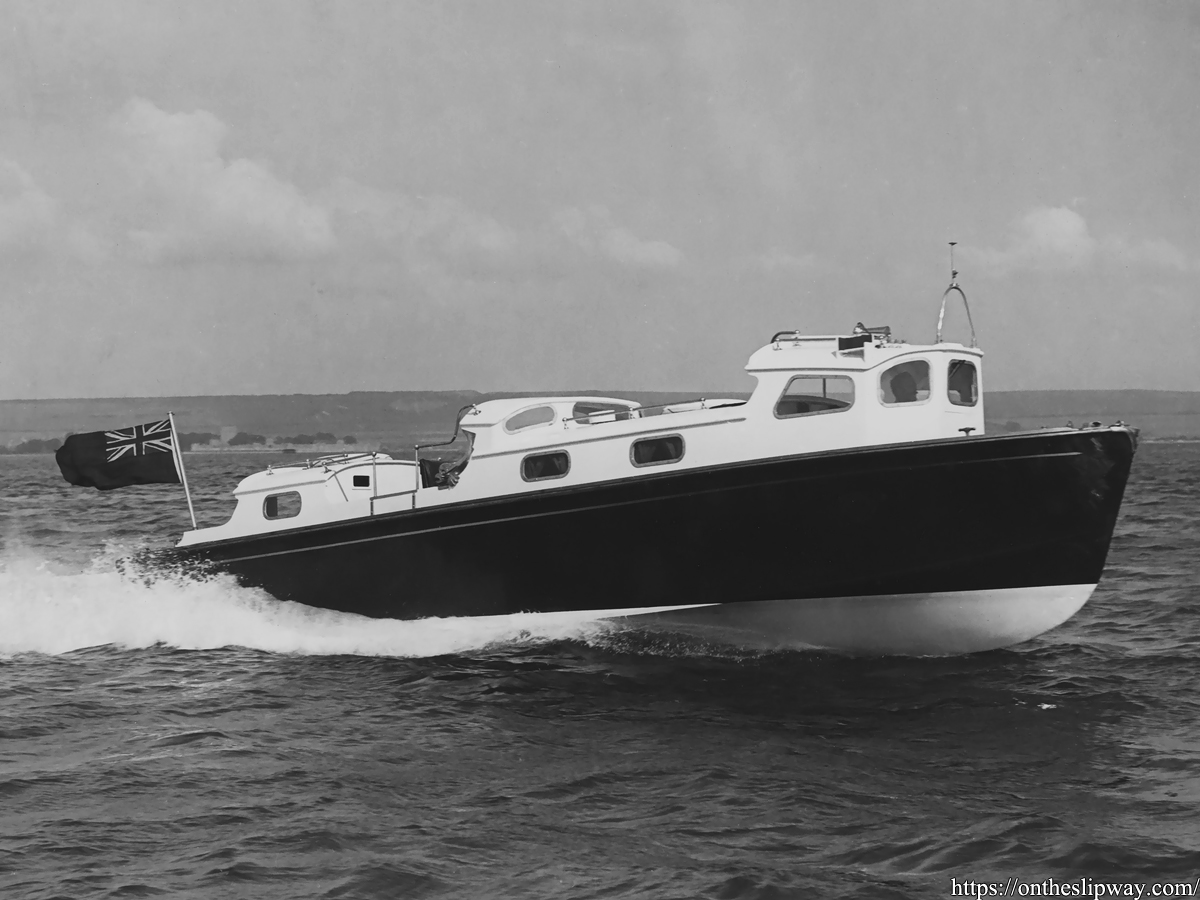

– Added 35 ft Vospers Admiral’s barge, one image

15/03/2025
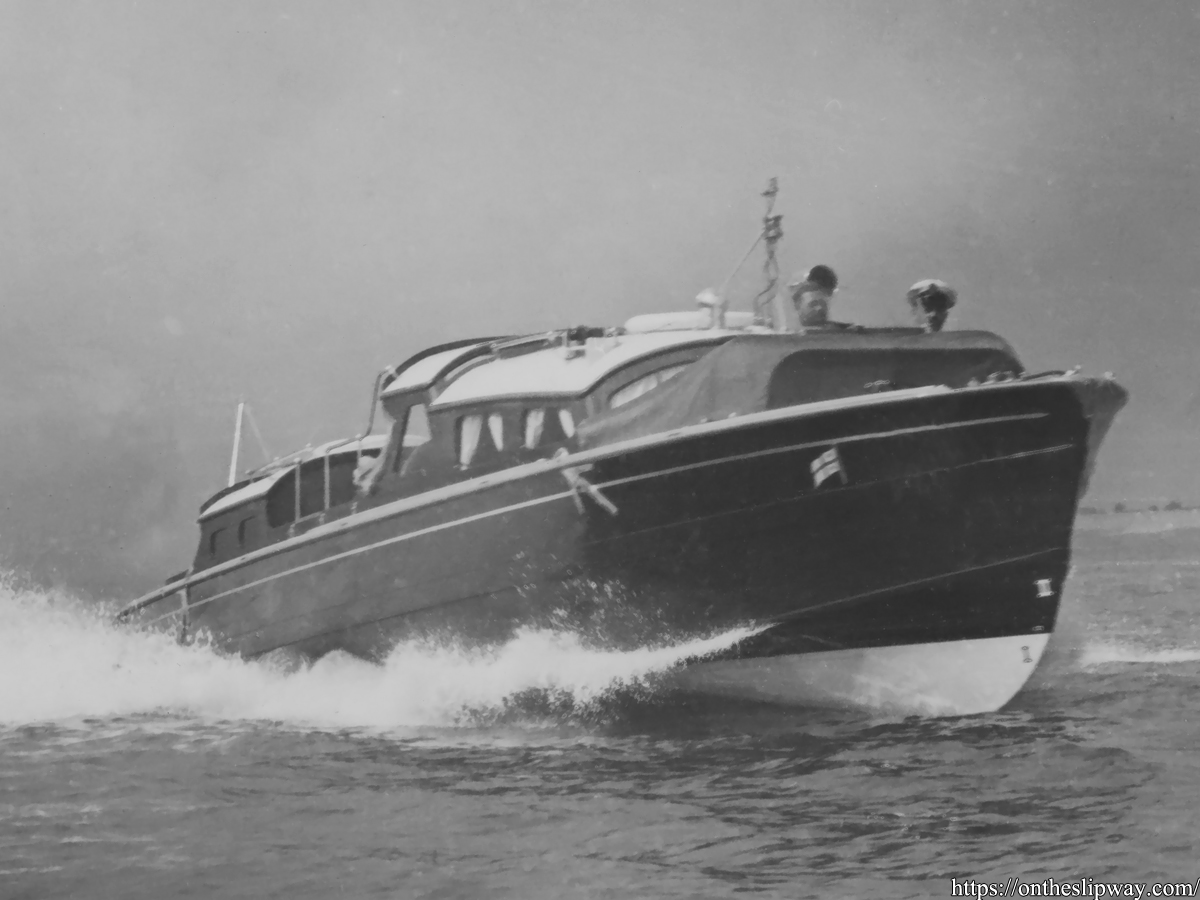


– Added 3 images of the 35 ft Fast Motor Boat, Admiral’s barge version
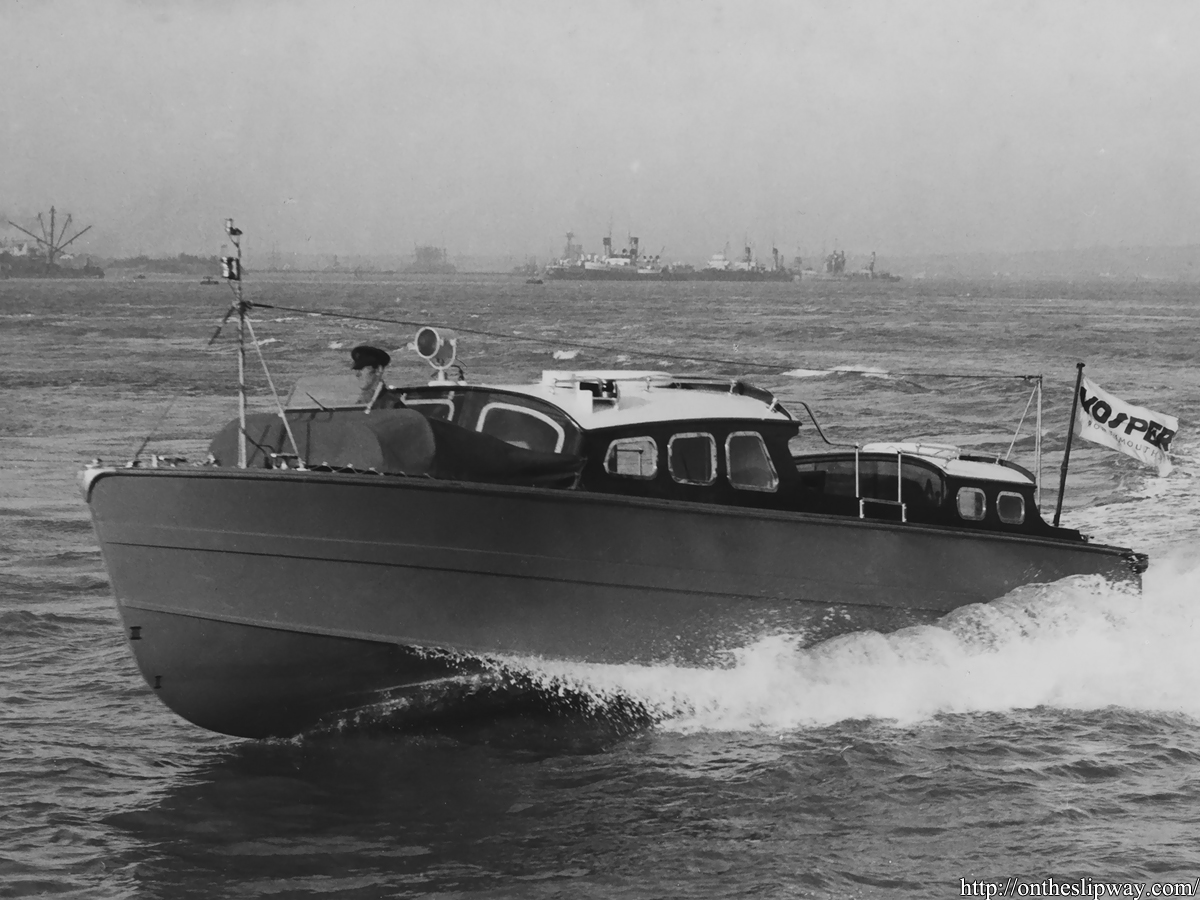

– Added 1 image of the 35 ft Fast Motor Boat, Vospers version

14/03/2025
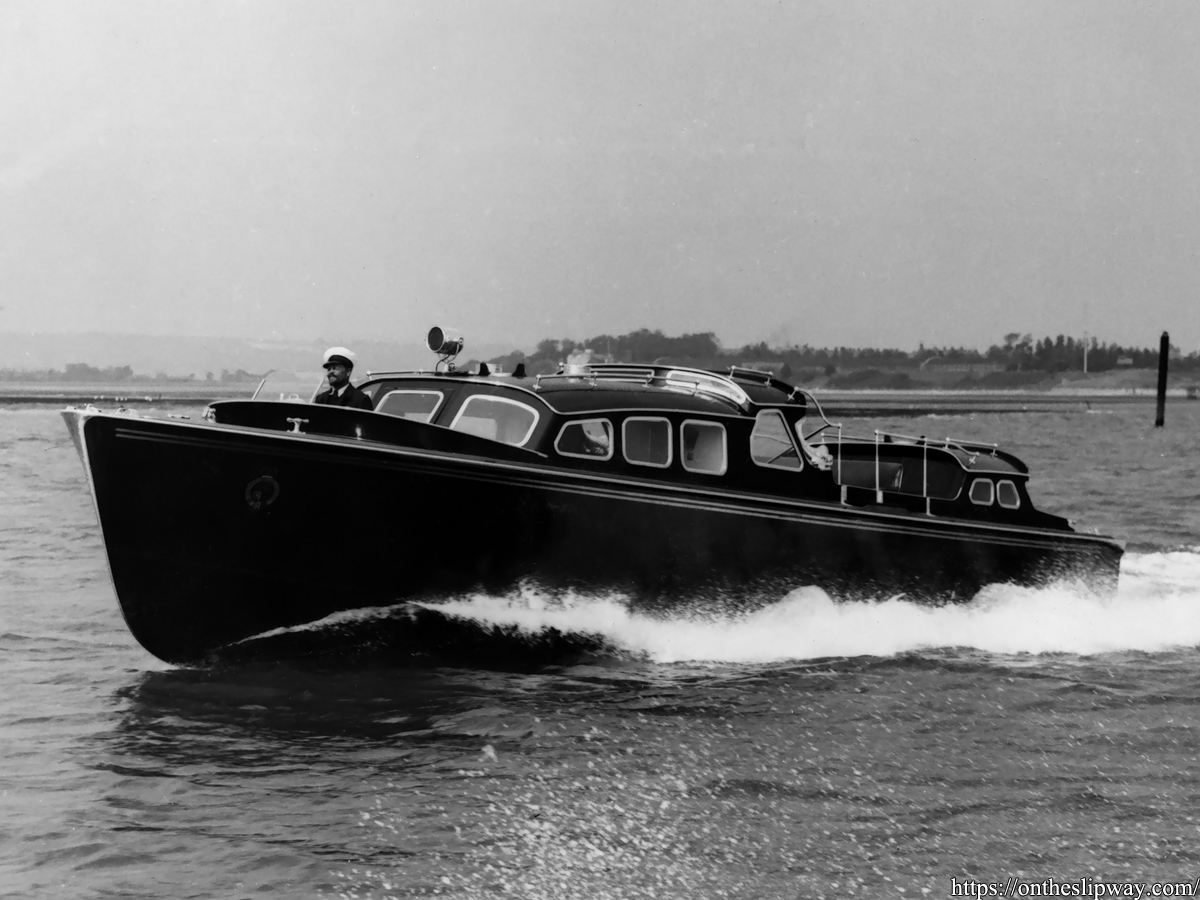


– Added 2 images of the 40 ft Royal Barge (trials, engine compartment)

09/03/2025
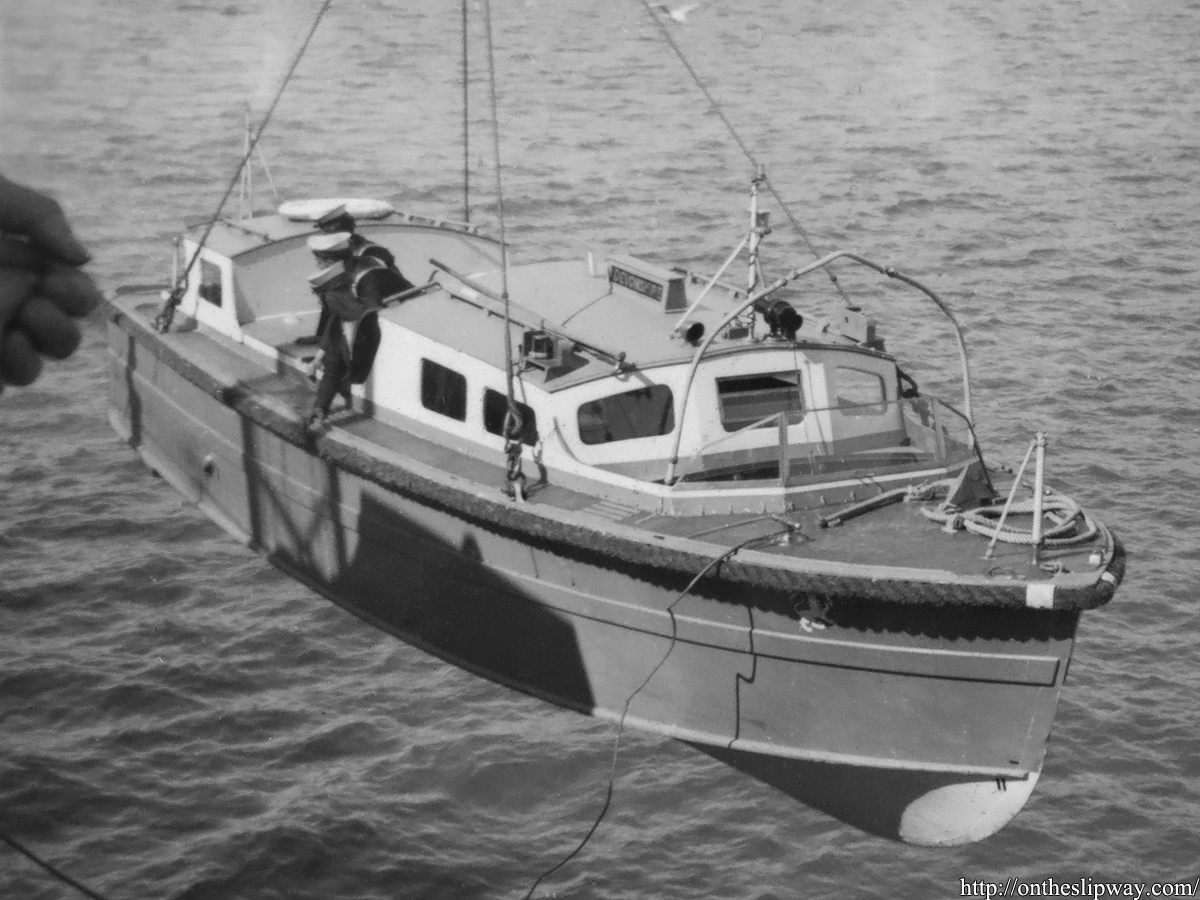


– Added 2 images of the 35 ft Fast Motor Boat, HMS Devonshire)
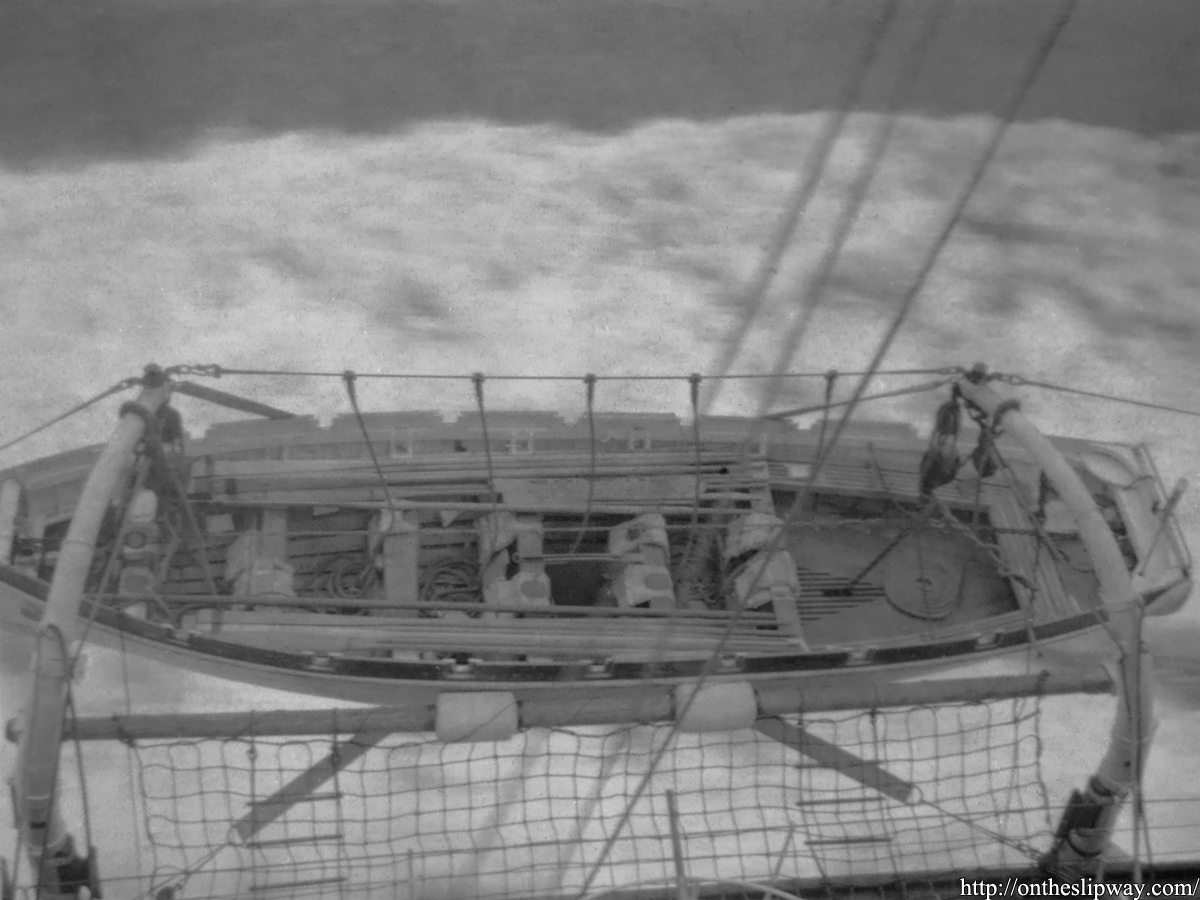


– Added 5 images of the 32 ft Cutter, HMS Devonshire)

13/09/24
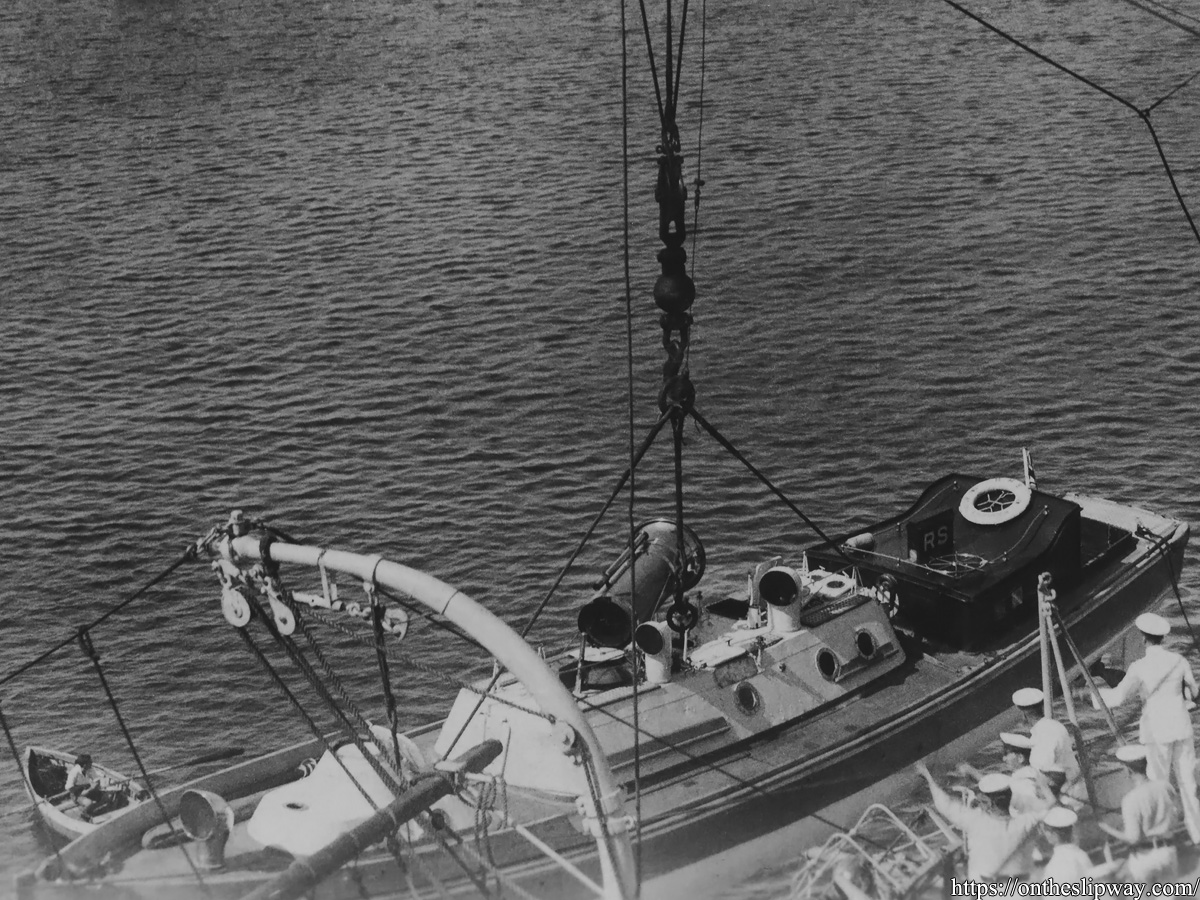

– Added 2 images of the 50 ft steam pinnace (HMS Royal Sovereign)
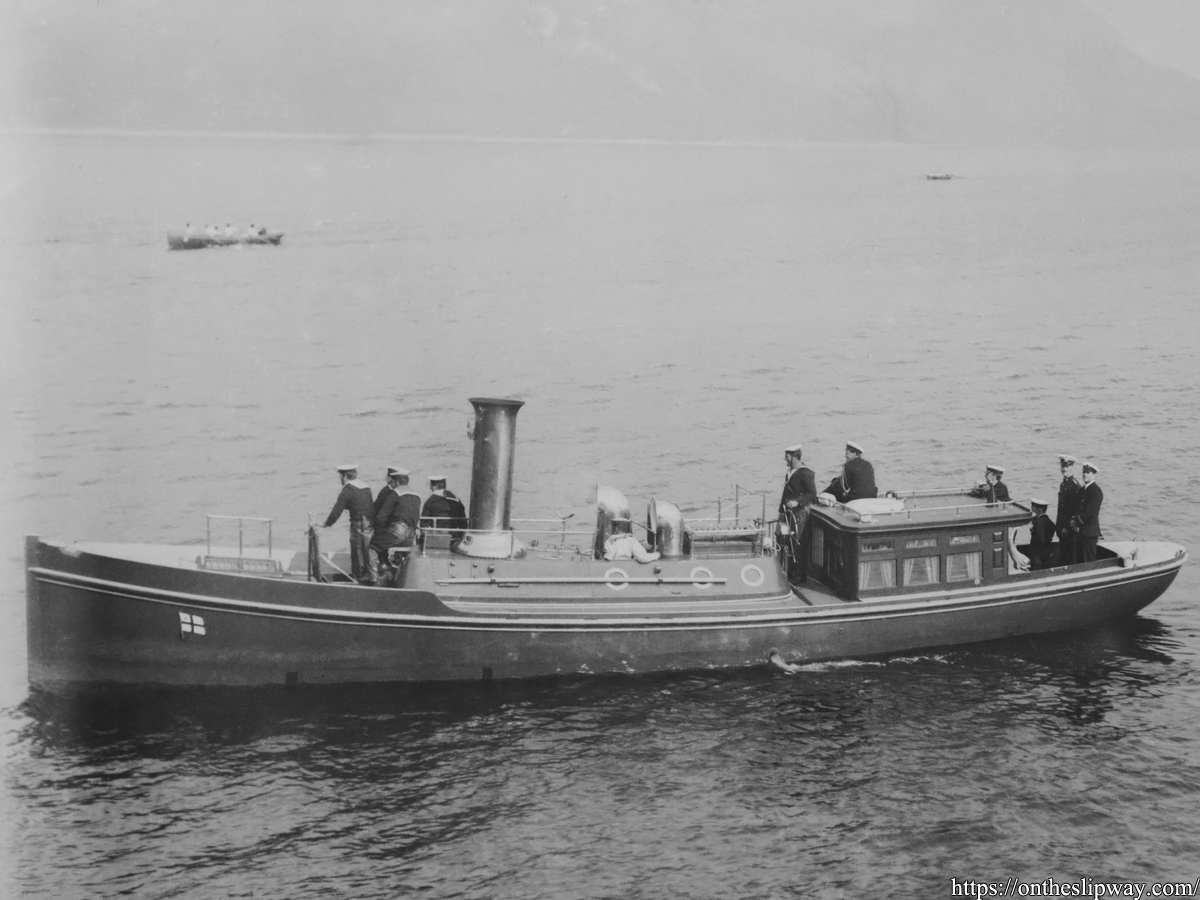
– Added 1 image of the 45 ft admiral’s barge (HMS Warspite)

15/06/24
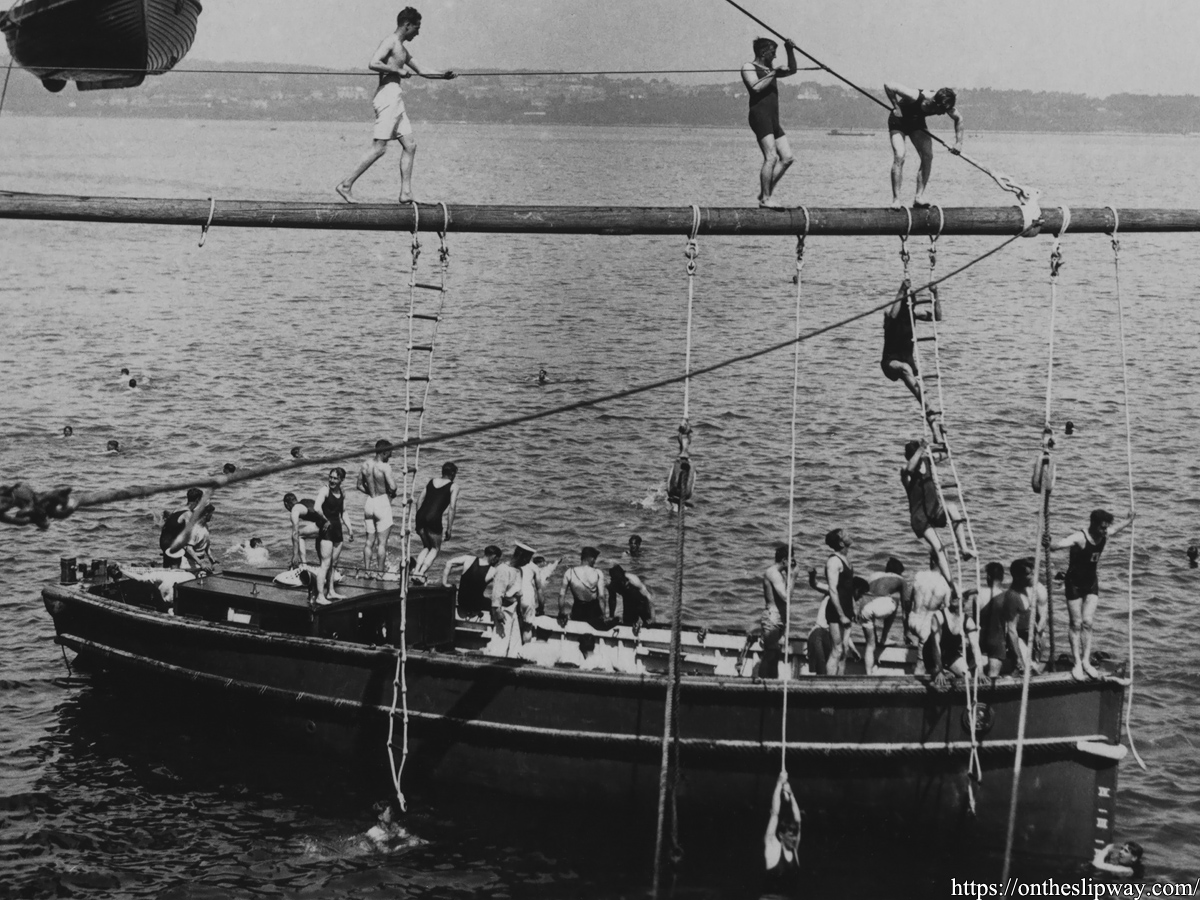
– Added 1 image of a 45 ft Motor Launch (standard type)

22/03/24
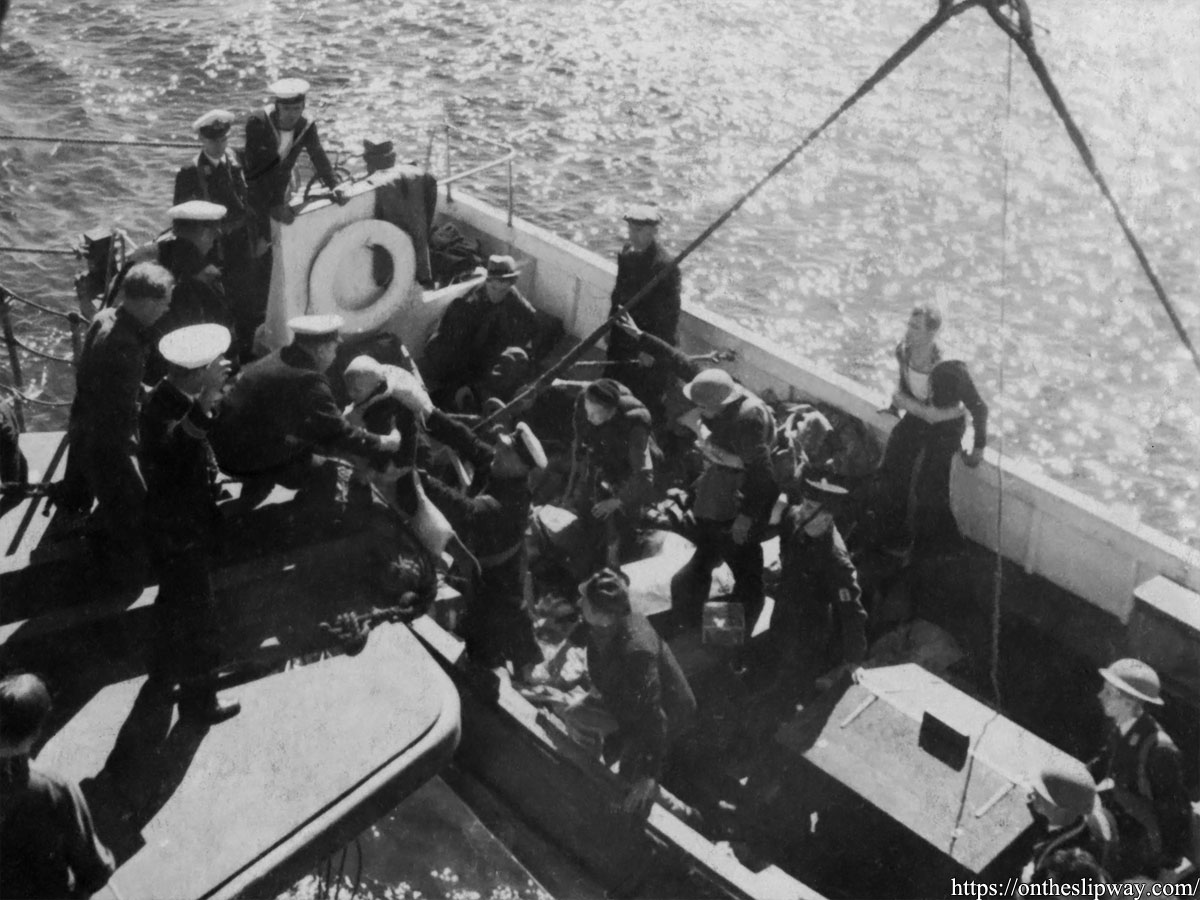
– Added 1 image of HMS Renown’s 45 ft Motor Launch (light type)

12/02/24
– Added 2 images of HMS Dorsetshire’s 35ft Motor Pinnace

07/10/23
– Added 1 image of HMS Prince of Wales’ 25ft FMB (presumably)

01/10/23
– Added two scans of drawings of the 32 ft cutter (from McDermaid & Manual of Seamanship)

21/09/23
– Added 1 image of the 40 ft Royal Barge (rear view, trials)

04/09/23
– Added list of yards to main boat page as a reminder; to be appended
– Added 1 image of the 32 ft cutter (HMS Hood)
– Added 1 image of the 50 ft steam pinnace (HMS Hood)

03/09/23
– Added Vospers advert to main boat page with ID’s insofar as I can determine
– Added placeholder for 20 ft Fast Tender
– Added 4images of the 32 ft cutter

11/08/23
– Added 1 IWM link(Q 18011) to balsa raft
– Added 1 IWM link (A 7776) 45 ft Motor Launch (light type)
– Added 32ft cutter plus link to Albatross pdf

08/08/23
– Added scan from Newton clinker/carvel/diagonal defs

05/07/23

– Added 1 IWM link (A1519) of HMS Revenge’s 45ft standard type launch

03/04/23
– Added 1 image of 30ft gig

19/02/23
– Added 40 ft Royal Barge, 2 scans, 1 IWM link

17/12/22
– split 45ft motor launch into standard and light type pages

11/11/22
– Added image of 27ft whaler in Gibraltar, 1938
– Added 30ft gig, added one image

06/11/22
– Added image of a 35 ft Fast Motor Boat Type I from HMS Southampton
– Added image of a 35 ft Fast Motor Boat Type II from HMS Superb
– Added image of two 45 ft Fast Motor Boats Type II aboard HMS Repulse.

08/06/22
– Added image of King George V and Admiral Jellicoe in a  50 ft Steam Picket.

01/06/22
– Added thee images of HMS Vanguard’s 45 ft Diesel Picket

08/03/22
– Added (same) overpriced image of HMS Ramillies’ on both 50ft Steam Picket and 45 ft Motor launch pages

07/03/22
– 42 ft Motor Launch: blank page added. Adding comment to it and 45 ft regarding number of rubbers at the side (1 and 2 for the 42 and 456 ft respectively)

27/02/22
– 45ft Diesel Picket: adding ref. to history.naval.mil of Somerville’s barge (?)

30/11/21
– Carley floats; 2 image added (Sheffield/Victorious)

26/10/21
– 35 ft Fast Motor Boat type 2, one image added

24/10/21
– Added Night Life Buoy, four images

22/10/21
– Added Balsa raft, two images

03/07/21
– Added 37.5 ft RAF Seaplane Tender, one image
– Added 35 ft Fast Motor Boat type 2, one image

27/05/21-
– Added 30 ft Fast Motor Boat, two images
15/05/21
– Added IWM A 8404 to 35 ft Fast Motor Boat type 1

18/01/21
– Added 45 ft Fast Motor Picket Boat (Thornycroft), GA from Lavery’s Churchill’s Navy.
– Added 45 ft Fast Motor Boat – Type II (British Power Boat). Moved images of wrongly ID’s images from 35 ft Fast Motor Boat Type I to this page.

14/01/21
– Added image of Rodney’s 27ft Whaler Picket
– Added images of Resolution’s & Nelson’s 50ft Steam Picket
– Added Rafts & Floats, Denton Raft & Carley Floats.

11/01/21
– Added remarks from info sheets to all posts
– Indicated drawing of the 45ft Motor Launch is of the light type only.

09/01/21
– Added 30 ft Motor Pinnace, GA, lines (no info sheet available)
– Added 32 ft Motor Cutter, GA
– Added 35 ft Fast Motor Boat type 2, GA, lines, info sheet
– Added 36 ft Harbour Launch, GA, info sheet

07/01/21
– Added 35 ft Motor Pinnace, GA, lines, info sheet
– Added 36 ft Motor & Pulling Pinnace, GA, lines, info sheet

06/01/21
– Added 14 ft Sailing Dinghy (placeholder)
– Added 30 ft Gig (placeholder)
– Added 50 ft Steam pinnace (placeholder)

05/01/21
– added 25 ft Fast Motor Boat
– added 35 ft Fast Motor Boat type 2 (placeholder)
– added 35 ft Fast Motor Boat type 3
– added 45 ft Motor Barge

04/01/21:
– Page initiated
– Added 16ft FMB: GA, lines, info sheet
– Added 25ft Motor Cutter: GA, lines, info sheet
– Added 35ft FMB Admiral’s Barge: Image, IWM links
– Added 35ft FMB – Seaplane tender: IWM links
– Added 45ft FMB & Barge: GA, lines
– Added 45ft Diesel Picket: IWM links

Carley Floats

I started these Carley floats about a year earlier while we were in the middle of rebuilding our house leaving little space for any modeling (the model was stored). The floats didn’t require the model to be at hand for fitting and I wanted to do something. So, some time for minor parts. Ahston et al. (1993) published a thorough investigation on the loss of the HMAS Sydney and a related Carley float; one float was apparently the only remnant for HMAS Sydney, a cruiser lost with all hands after a battle with the German auxiliary cruiser, HSK Kormoran, in November 1941. This report contains a bit of particularly useful information.

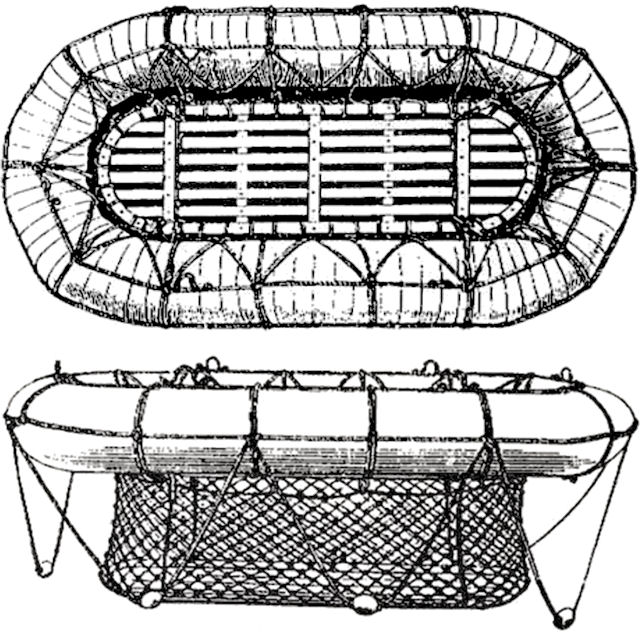
The Carley float is a simple combination of copper tubes with a cork, cotton, and canvas covering. A wooden grating that could be lowered in the water was fastened with rope where you could ‘stand’.  The even less fortunate were expected to cling on to the ropes around the float making  it not much more than a large life ring for groups. I can image you can only survive with such a float for a few days when the weather is favorable. Note the characteristic way in which the rope is wound around the tubing, showing rope going around the entire float and around the circular section, but also rope at an angle at the inside. I wanted to capture this specific detail. Before starting, I had to know which types of float were carried by HMS Hood as the exact dimensions of the floats weren’t written down anywhere I looked.  Ahston et al. give a table of the types of rafts available at the time:

No Size Tube Diameter
5 3ft 6in x 6 ft 12in
6 3ft 9in x 6ft 6in 13in
7 4ft x 7ft 14in
8 4ft 6in x 7ft 6in 14in
19 5ft x 8ft 14.5in
20 5ft x 10ft 15.5in
14 6ft x 10ft 16in
15 6ft6in x 10ft6in 17in
16 7ft x 12ft 18in
17 8ft x 12ft 19in
18 9ft x 14ft 20in

It is noted that each float was fitted with two paddles (four for No. 18), a boat hook and a painter (?); No 16 to 19 had two ladders. This is information as precise as one could wish.

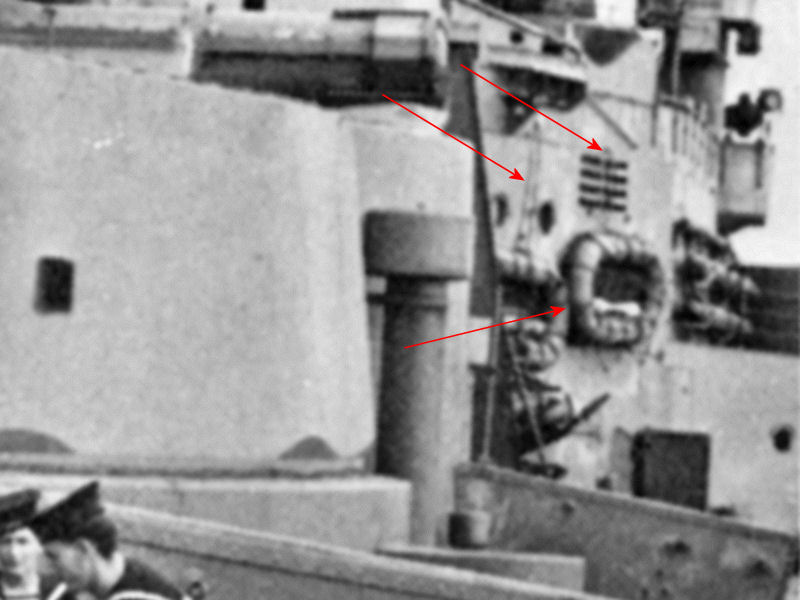
This image shows two Carley floats hanging from a few ropes to the bridge bulkhead and, based on its relation with the bridge structure it’s suspended from,  I’m quite certain it has to be 5 feet wide based. Note that the ropes differ from the pattern usually observed: there should be some rope at the center of the float but it’s not. I haven’t seen a single image of a float with the pattern as seen here so I guess the crew repatterned the float? This detail was omitted from the raft models though.

I found out that the closest matches are Nos 19, 20, and 17. The Nos 19 are fitted against the bridge superstructure and on the disinfector house, No 20 is on the superstructure between the funnels and fitted to a side bulkhead of the aft searchlight platform and No 17 is mounted against the aft bulkhead of the searchlight platform. The position and number of floats aboard HMS Hood seems to differ greatly over the years, but I think this is fair assessment of what float goes where for April 1941. Note that the floats to the port side of the forward funnel appear to be lying on some structure. Instead of worrying about the type of Carley float, the real question is: what is this structure? More about this later below.

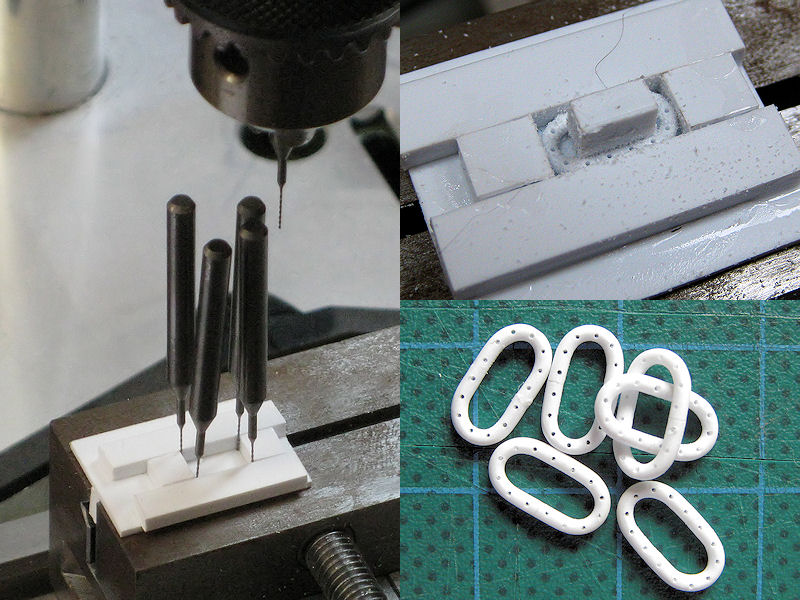
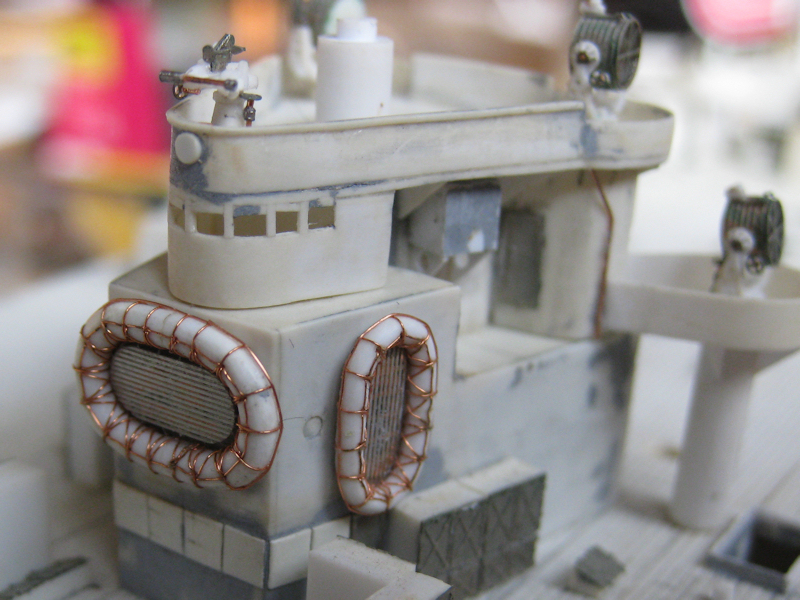
The model floats themselves were made from styrene rod. You first need to bend the rod into shape. I played with boiling them, putting the parts in the oven and I eventually used a cigarette lighter on rod curved around the end of a drill with the right diameter. You only need to heat the part for a fraction of a second or it will melt or start to burn. Each float consists of two halves that do not have a tendency to bend back. Next, I used the drill press to make a drilling jig. At left you can see the outlines with a few 0,3mm drills. I glued thick styrene strip against these drills, let it dry, put in the floats and drilled away. I used the cross table of the drill press for a reproducible pattern. The result is a series of drilled-in rings, here for the 5×10 models.

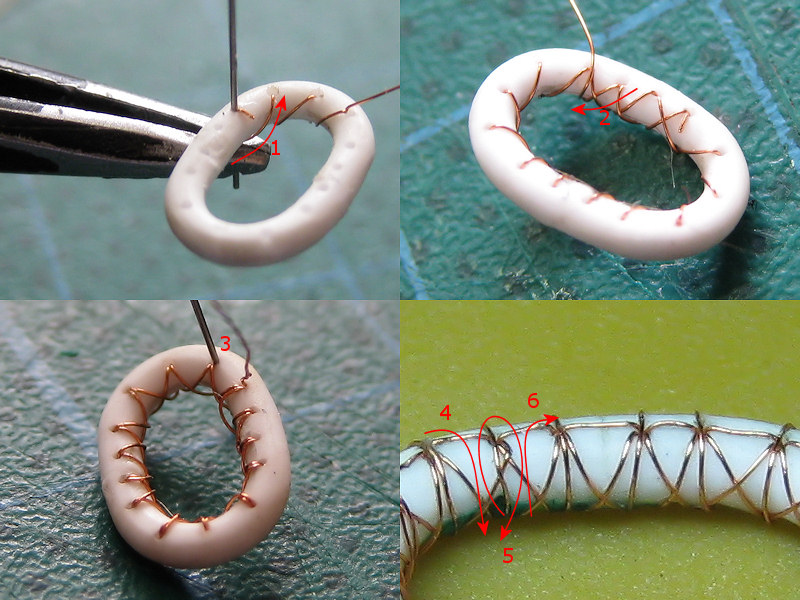
The rope pattern can be simulated with brass wire. Gluing small pieces along the raft gives a lot of glue spots and doesn’t really look very good. So,  thought it would be nice to sow the ropes with 0.1 mm brass wire. The real Carley floats aren’t very neat, so making this rope pattern by hand gives with the same variation. Here’s an example of the largest float so that you can actually see how these floats were rigged. I started with gluing the end of the wire to the inside to the float, out of sight and not clogging up one of the holes (1).  I then went around the float, zigzagging from point to point. The procedure is reversed and the cross pattern in the ropes appears (2). You constantly have to correct the wire with a pair of tweezers or push the wire through the hole with small drill to get the best result (3).  Simply pulling the wire taut every few runs doesn’t give a good result. Sometimes the wire breaks, but repairs are easy to do.

After the cross pattern was made I continued with the other ropes. I jumped from one hole to the next over the top surface of the float and put the wire through the hole (4). I went round the float once (5) and before pulling it taut,  I ran the wire back through the hole, ending where I started (6).  The wire around the float lies on top of the wires going from hole to hole, kept neatly in place.  In the end, a single wire produces the entire pattern and runs 4 times through each of the 0.3mm holes.  About 15cm/6in of brass wire is needed for the smallest float. Glue is added afterwards, at positions that are mostly out of sight. Even though this was fun to do, I wouldn’t recommend making all the floats by hand for a project where you need fifty floats. Next time I’ll cast a few for easy reproduction.

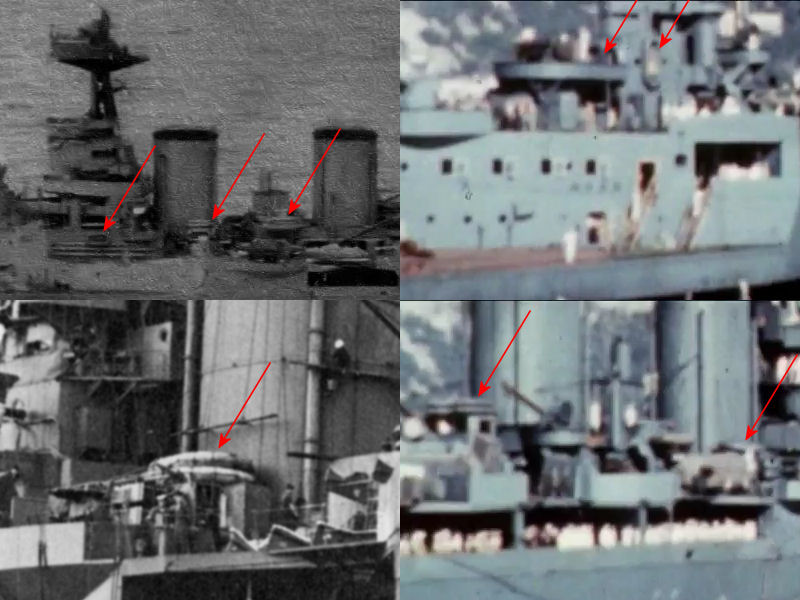
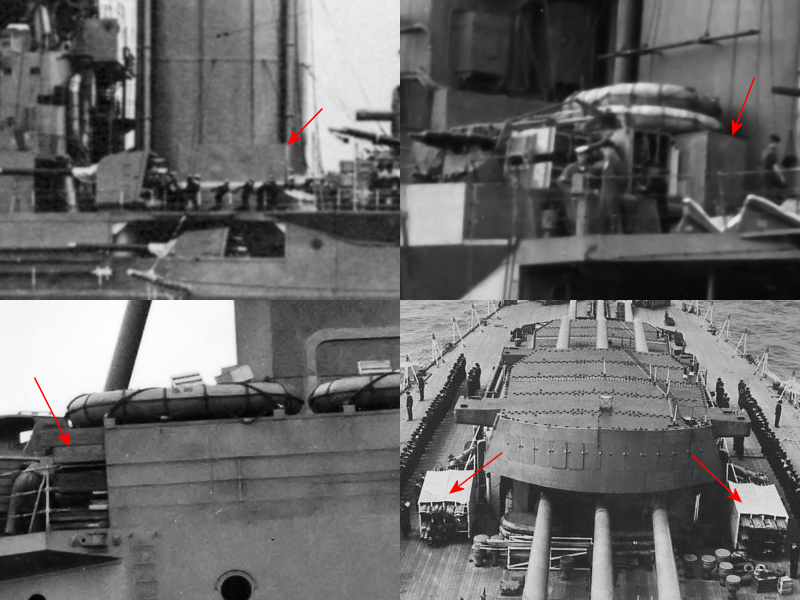
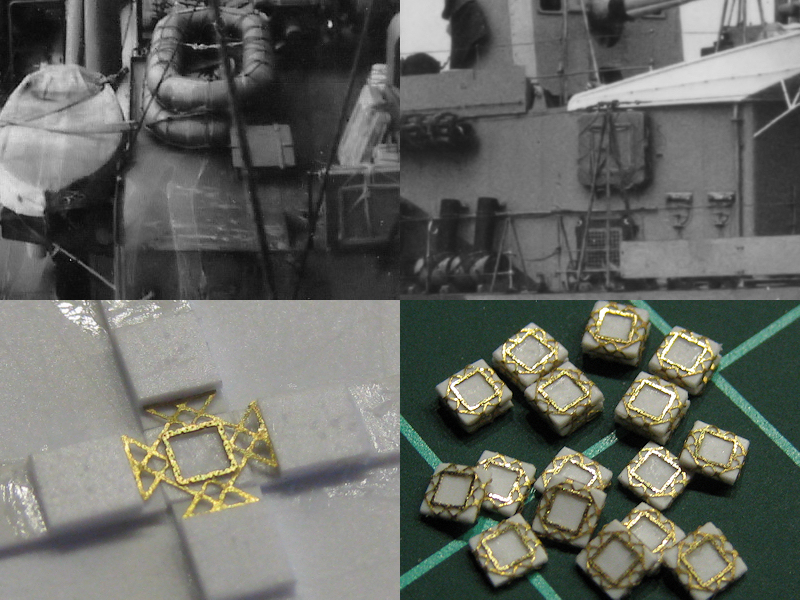
Now for that mystery block near the funnel. In the top left image you can see it hiding in plain sight and you really have to look closely or you won’t notice it is there at all. Top right shows the floats stacked on “it’. It appears to be fully closed. So, with no more to go on, what could it be? Other ships have similar blocks. For instance,  there are two of them on the boat deck on the King George V class battleships, shown bottom left (plus Carleys on top of it). Notice there’s a lot of planks and beams sticking out. Now, HMS Hood also carried a lot of planks and beams next to the funnels, deposited loosely and without any structure, so it might just be a neater and safer way for storage. On either side of the turrets of HMS Rodney (bottom right) you can find similar racks. These are shorted and appear to be oars storage racks? I cannot tell for sure for HMS Hood. I decided to add a randomly detailed rack to HMS Hood, based on the dimensions in the above images.

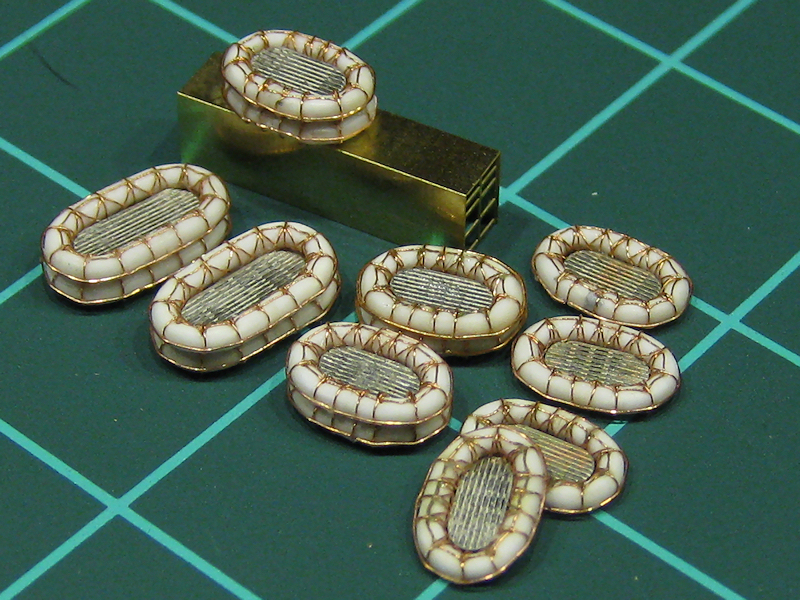
A second wire going around each float was added next. These wires are fixed with glue only and are not as ‘sturdy’ as the first wire. Some of the 5×8 and 5×10 floats were stacked. For the lower floats, on the wire you can see is actually added, not the complicated pattern.

The largest float is glued directly against the aft searchlight platform; there is some room between the etched grating and the outer ring so both are glued separately. One 5×10 float is also added, leaving just enough room for the door below it to open.

One other type of float is present aboard HMS Hood: a series of Denton Rafts. The top left image is of HMS Hood, showing the 16″ dinghy, two 5×10 Carley floats and a few Denton Rafts. The image right is the only other image I managed to find. The rafts were made from a simple piece of PE, glued to place usng a small template for easy centering. I have over 20 of these rafts to be added randomly on the structure between the funnels.

1) Ashton, J., Challenor, C., & Courtney, 1993, R.C.H., The scientific investigation of a Carley float at the Australian War Memorial, Technical Papers of the Australian War Memorial, No 1

Copyright © 2026 On The Slipway

Theme by Anders NorenUp ↑