Page 19 of 28

Bridge equipment, part I

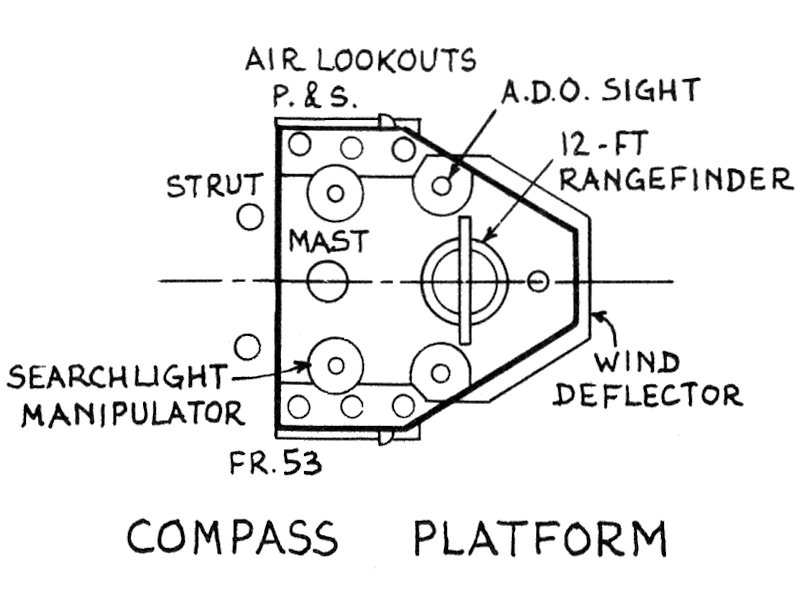
Nearly all resources of HMS Hood show the layout of the bridge equipment in the open air, though only as location placeholders. One good image is known of Hood’s Air Defence Position (ADP) showing a series of pedestals and smaller sights and range finders. Finding out which one goes where and what piece of equipment it is was the next challenge. In the end, it appears that HMS Hood is fitted with the same equipment fitted to all battleships, most heavy cruisers and fleet carriers. However, getting a good picture of that equipment is something different altogether as these smaller sights are usually placed in crammed positions that are visually obscured.

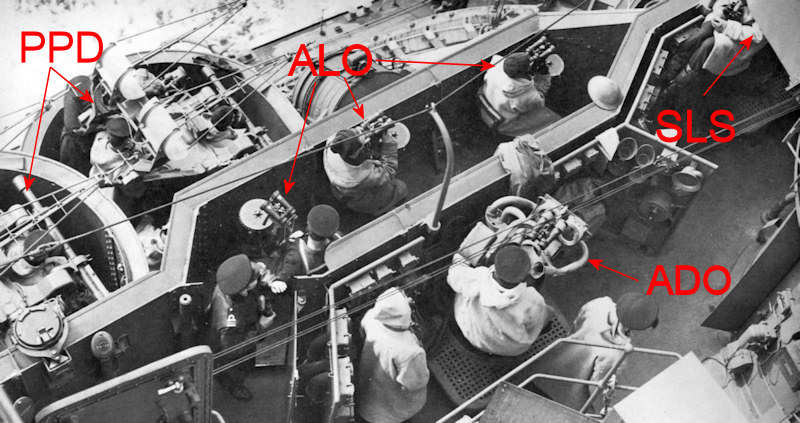
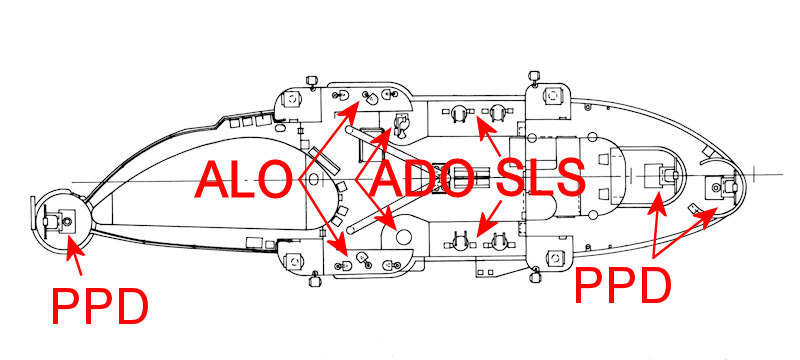
Here is a unique image of the ADP of HMS Hood. Some equipment is visible and was an unknown to me before starting doing some research. If you want to learn more about how and why the bridge of a British warship was equipped, I suggest reading The British High Angle Control System (HACS) by Tony Tony DiGiulian at the navweps website or the High Angle Firing chapter in the Gunnery Pocket Book at the Historical Naval Ships Association.

The ADP has a control team consisted of the Air Defense Officer (ADO) and his assistant. He has a special ADO sight that can indicate the to-be-engaged aircraft by relaying a target bearing. Such an ADO sight is thus an aircraft bearing indicator but this sight also functions as a star shell sight at night. The other ADO sight is manned by his assistant, so two of these sights are present. There are six so-called Air-Lookouts (ALOs), three on each side of the ship’s bridge. Each ALO continuously observes an arc of the sky around the ship, watching for aircraft to appear. The ALO uses a position with a pair of binoculars. Once an aircraft is spotted and marked by the ADO, the High-Angle Control System (HACS) will determine the target’s speed and bearing so that it can be engaged by the heavy anti-aircraft artillery. Each large capital ship was typically fitted with three or four of such HACS directors. The model of the HACS is described here. Next to the HACS directors, a series of close-range pompom directors are fitted. HMS Hood was fitted with one such director for each pom pom gun, one Mark I and two mark IIs ). The pom pom and HACS directors in the Royal Navy were all fitted with the Yagi radar aerials later, but HMS Hood was sunk before those radars were fitted. One piece of equipment present on other ships that probably would have been fitted to HMS Hood was the Auto-Barrage Unit (ABU) that determined the range of the enemy aircraft, in order for all anti-air guns to fire a single barrage.

Several directors for the searchlights were also present next to these air-defence positions. There is a single searchlight sight per searchlight, but as the two ADO sights can also act as a searchlight bearing indicators, HMS Hood was fitted with four additional searchlight sights.

The captain himself also has a bearing indicator that was placed on HMS Hood, but not on the inside of the bridge probably due to space constrains. On the King George V class, these sights were placed inside. A final sight, according to John Roberts, is a UP sight placed near the upper ADP of HMS Hood. No information was found on this particular sight.

So, the typical equipment found on RN warships is one pair of captain sights, a pair of ADO sights, two pair of searchlight sights (depending on the number of searchlights), three pairs of ALO sights, a pompom director per gun and a number HACS directors. The latter is the only one that is clearly visible on warships.

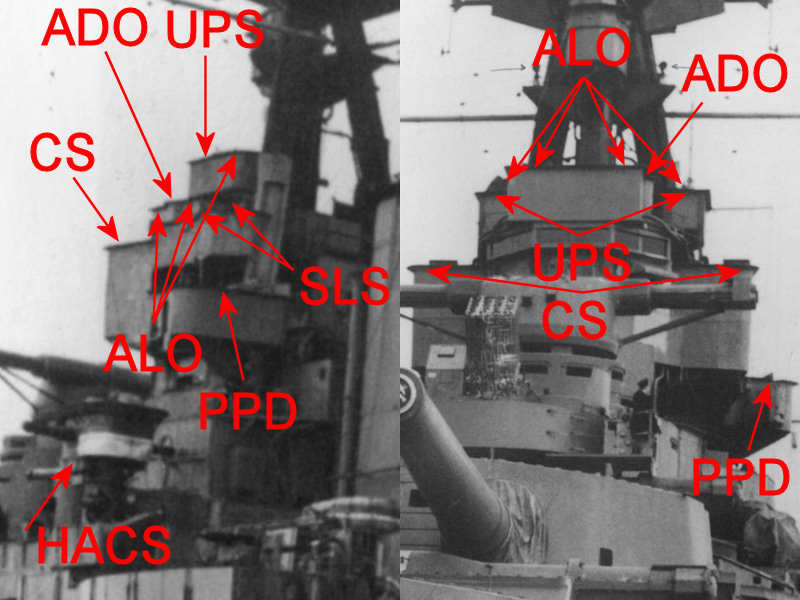
This image of HMS Prince of Wales’ bridge shows the ADP most clearly. From this picture follows that the sight on HMS Hood’s ADP is the same. The three ALOs are seen clustered together with the pom pom directors fitted a level lower. The searchlight sight (SLS) is just out of view.

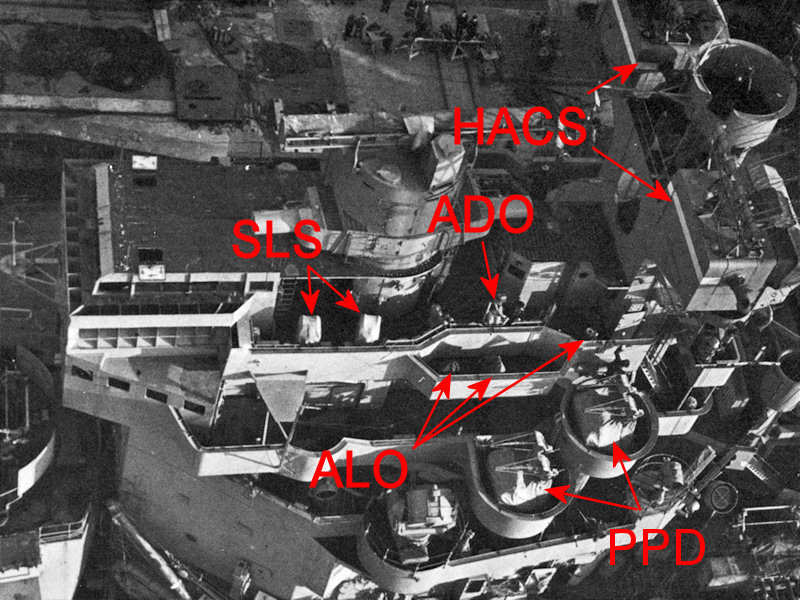
A clear top view of the bridge of HMS Duke of York. The three ALOs are well visible. HMS Prince of Wales and HMS King George V have their ALOs clustered together in a single position, but one of the ALOs aboard HMS Duke of York appears to be placed a but further aft. The searchlight sights (SLS) are seen at left below the main fire control director and are wrapped in covers, as are the pom pom directors (PPD). The captains sight is inside the fore bridge and is not visible.

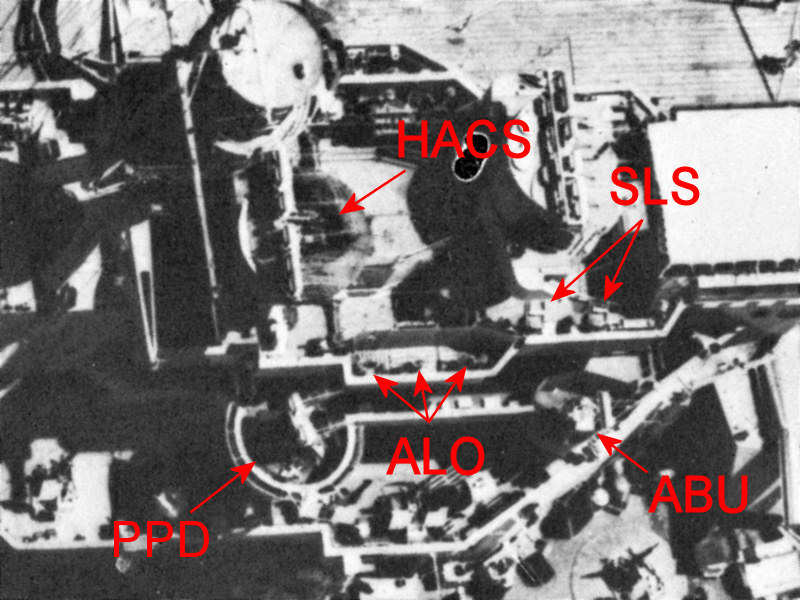
An excellent top view of HMS Queen Elizabeth, clearly showing the six ALO positions and searchlight sights (SLS). The ADO is not visible, but might be located in the fore bridge, as with HMS Warspite (slightly different bridge layout). The ABU is visible bottom right.

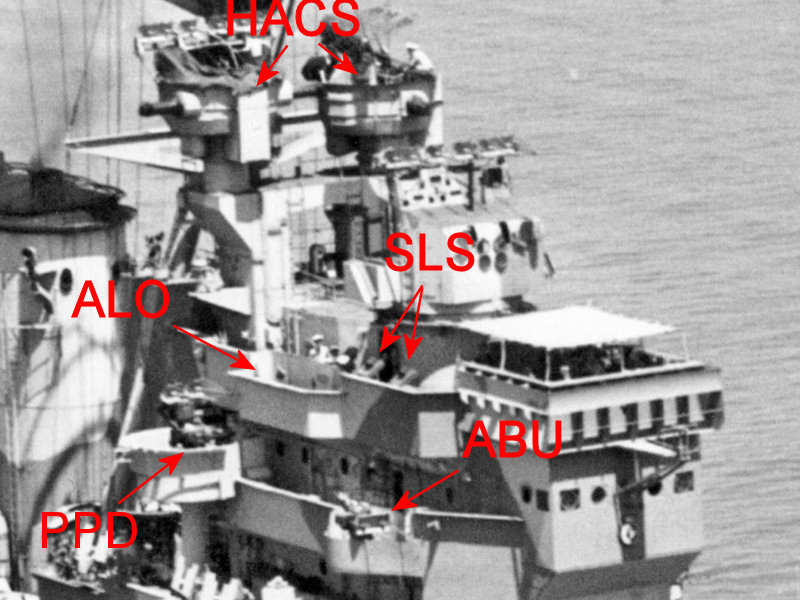
A very clear front view of HMS Queen Elizabeth showing the searchlight sights (SLS) and the ABU.

This schematic of the bridge of HMS Victorious shows the same equipment as on the battleships. Even with everything clearly in the open, I haven’t been able to find a good picture of the bridge of a carrier.

Now that I know what to look for, this equipment is visible on most other larger ships and even on monitors such as the layout above indicates, but the information on bridge equipment of most of these images is poor. If you flip through Raven and Roberts Battleships and Cruisers volumes, you’ll notice many (unannotated) positions of the ADP equipment corresponding to the number of directors I now expect on board these vessels.

So, here’s a clear image of HMS Hood showing the location the Captain’s Sight (CS) and UP sight (UPS) as well. This clear image indicates that it is impossible to see any of the items on photographs as described above and the first image in this post of the ADP is the best there is as far as HMS Hood is concerned.

Part II of this post will show the individual units in detail.

Emplacements of the Vickers Quad Machine Guns

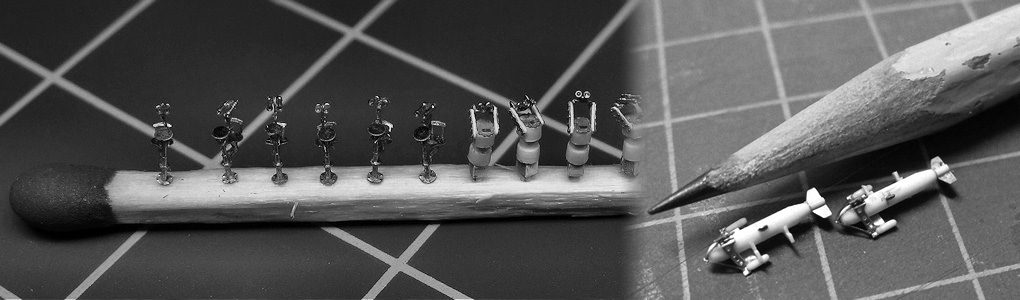
Here’s a view of the forward superstructure where the Vickers quad machine guns were placed. As you can see, the structure near these guns is open and show some signs of rearranging the bridge to get them open. A support pillar is almost certainly present, as is the case with the aft Vickers machine guns. I used my newly acquired drill press to drill in the bridge part and added the pedestal to the gun. It can be added fully painted without having to worry too much about masking. It also gives the gun a small handle while paining them. Two ammo lockers are present per gun, although I have no photographic confirmation.

Photographs of the aft Vickers emplacements show that only a single ammo locker was added to the gun platform, so adding two is definitely wrong. This is confirmed by images of wreck debris where one pedestal was found upside down with only one ammo locker. Note in the right half that a small ladder is present and that only a very low single-bar railing is present. So, where is the second locker?

I think—judging from these two photographs from the offical HMS Hood site—the second locker is simply stored on deck.

The emplacements were made using lathe, as the pedestals are small tubes that hold both the guns and fit nicely onto the deck part (The gun is not glued into position). Of course, while writing this blog post I noticed that the locker on deck level for the port side gun was not fitted snugly against the pedestal as on the starboard mount, but some distance to toward the ship center. Ah well.

Pompom director Mk I

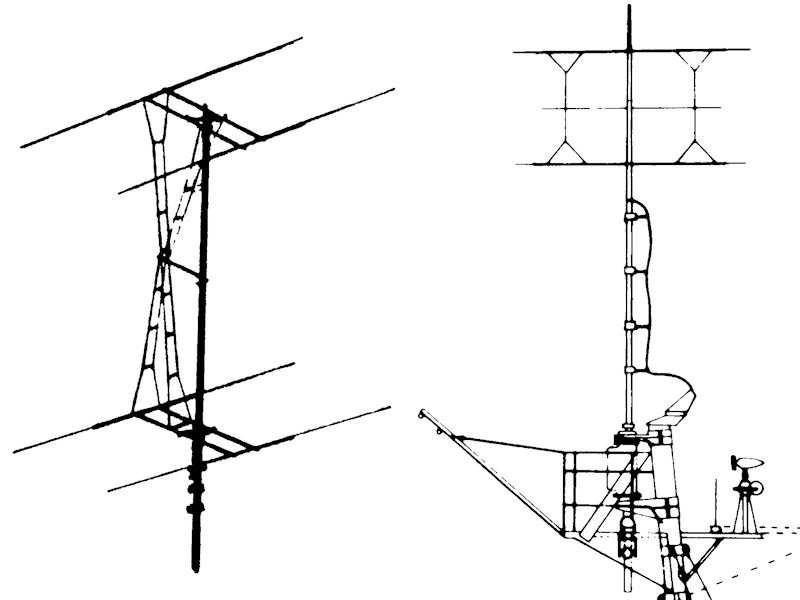
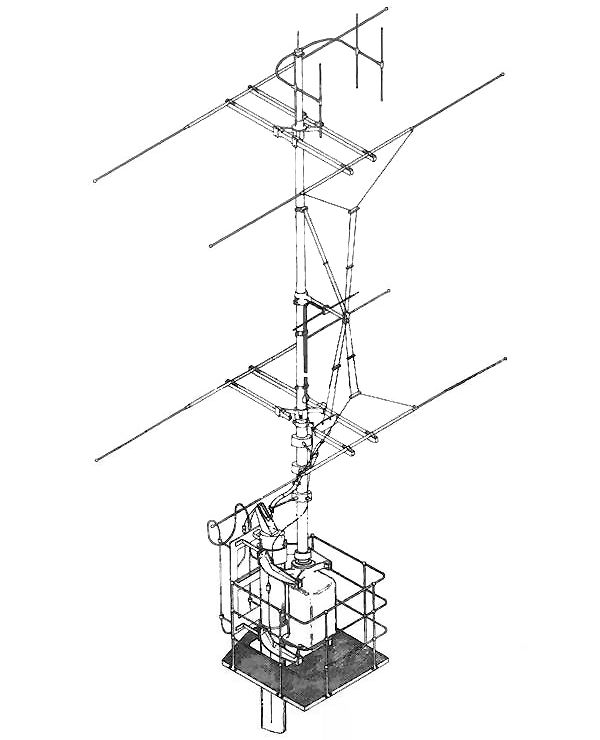
The pom pom director Mk I is an elusive director. The Mk 1* was fitted to Rodney & Nelson, Hood, Furious (2), Royal Sovereign (2), Barham, and locations at Fort Cumberland, Devonport, and to Vickers-Armstrongs. The Mk I** was also fitted to Hood, as well as Barham, Ramillies (2), Repulse (2), Nelson, and locations at Porthmouth, Crayford, Chatman, and to Vickers-Armstrong. The differences between the versions consists of a cross wire foresight and some additional knobs although the older units were updated. The differences with the MkI** are unknown to me.

Knowing where these directors were fitted doesn’t really help in finding images. The location aboard HMS Hood is known but there are no photographs. Fortunately, Admiralty record Adm 186-316 in the UK’s National archives, entitled “Pamphlet on the director for the 2-PDR “M” Mark V Pom Pom” from 1932 contains a few pictures and diagrams. I ordered a copy for 30 pounds, just hoping the information would be there. Fortunately, it was! This pamphlet will be sent to the official HMS Hood site later.

From the material I gathered, it was clear that the directors Mk II to IV were smaller updates to the existing design while keeping a general family resemblance. The Mk I didn’t fit this pattern as the space located aboard HMS Hood for these directors was too small for the Mk IIs: the Mk I had to be smaller.

Here’s all the photographic material of the Mk I I could find. No measurements or general dimensions and no details of the lower part of the director.

The picture above shows something that does resemble the director greatly and is so far the only picture I have of the Mk I director “in the wild”. It also allows me to estimate the general dimensions, even though the dimensions of its emplacement are estimates as well.

Here’s the reconstruction in Autocad. The image at right is with the estimated tub dimensions of the spotting top emplacements.

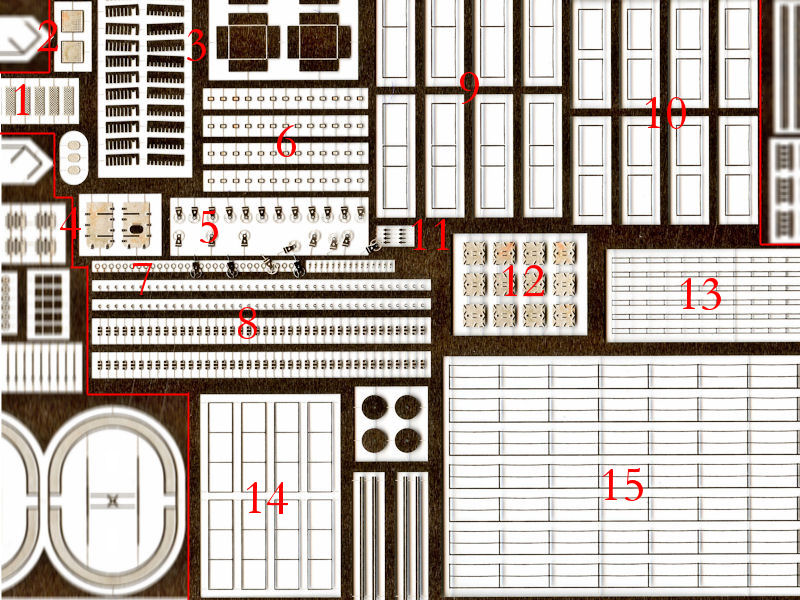
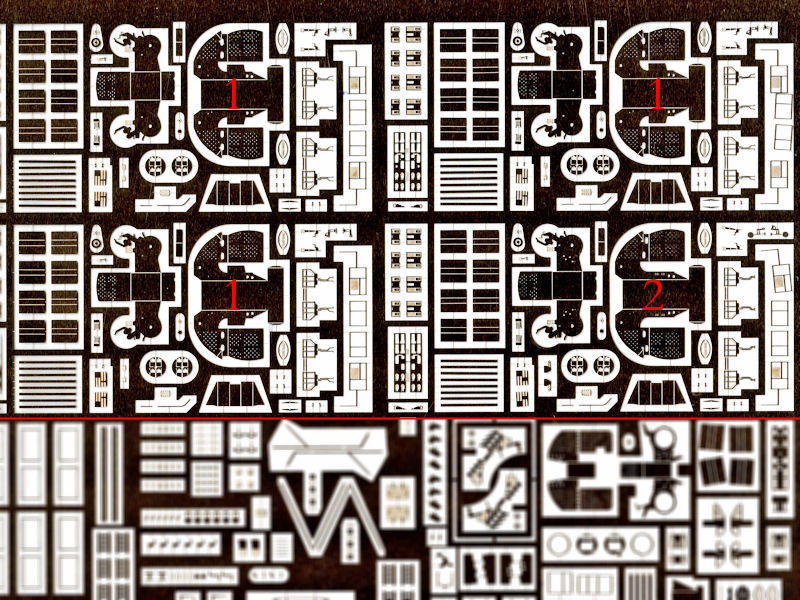
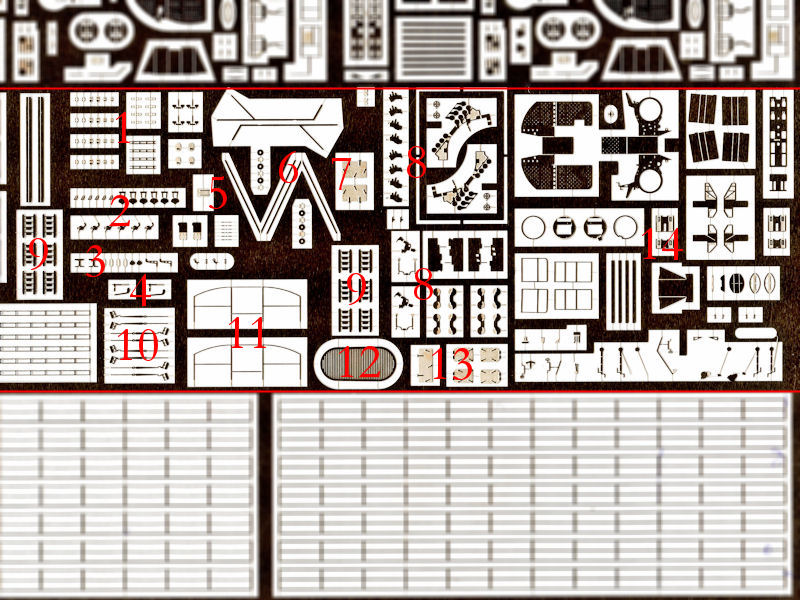
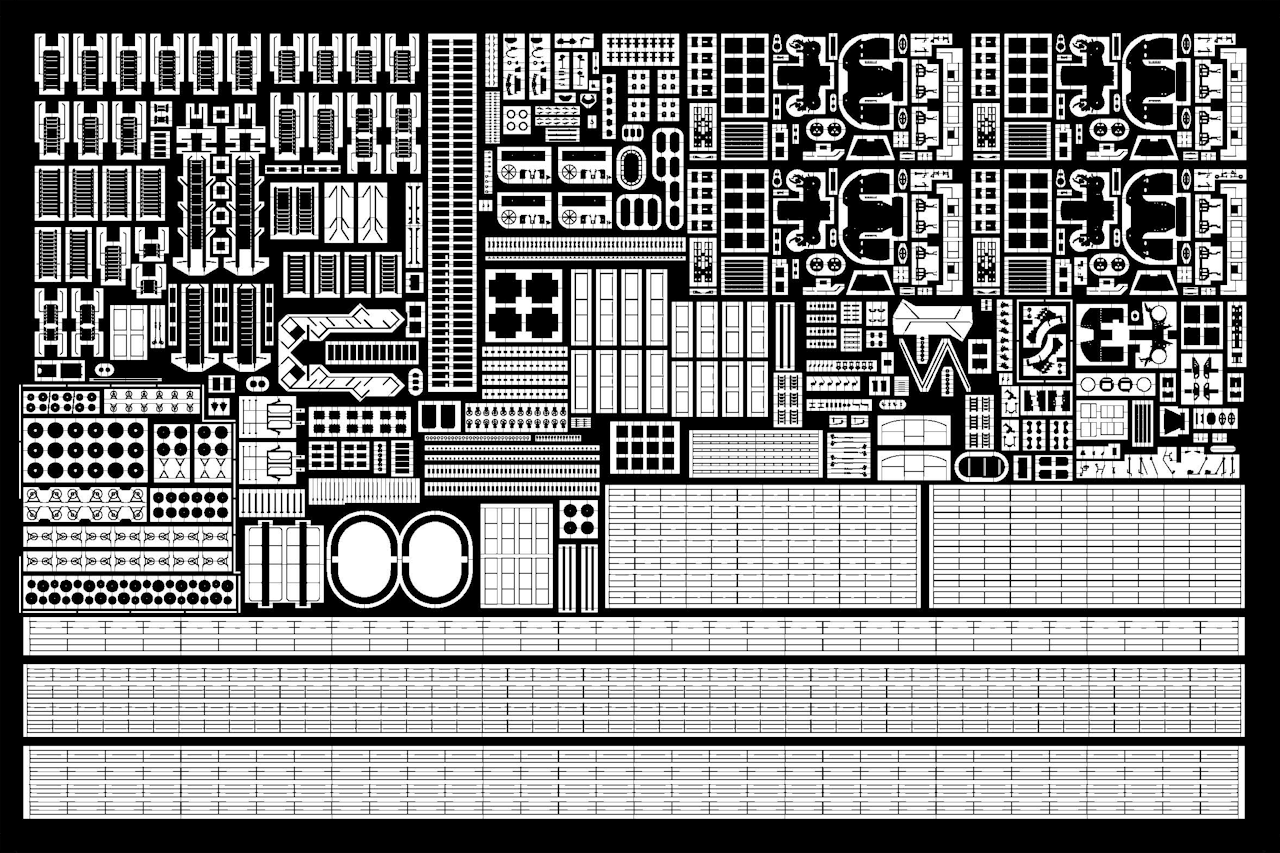
This is the model of the Mk I together with the better-documented Mk II director. It’s not really much lower, but it does have a smaller footprint. I do not know if there are chairs and platforms fitted to the pedestal, as I do not have any more information. I do know there were more chairs fitted to the Mk II so that model will be updated later when my new etch set is completed. Of course, several etched parts for the foresight bars of this Mk I director will be included.

Here you can see the Mk I directors at their correct location. I copied an earlier picture with the Mk IIs. Note that the splinter shield now runs behind the directors, as is evident on photographs printed in Chesneau’s book. I changed the sponsons too: the radius of curvature is now equal to the radius of the circular emplacements on the spotting top when the directors where fitted aloft (AOTS Hood). The final locations were also fitted a bit lower than deck level to match the photographs better.

So, a lot of work and money spent on two puny directors that nobody knows what they look like… but one step closer to getting this model more correct than any other. I guess that matters.

Searchlights, part I

The large 44″ searchlights of HMS Hood were one of the last items of which I did not have good information except for a few pictures. Fortunately, John Lambert issued a series of drawings, L/O/162, although he mentions it’s the Mk VII of 1942-44, while Hood was sunk in 1941. I ordered them anyway and initially thought they were wrong as the frame didn’t match the photographs. However, I found out that nearly all pictures of the searchlights showed their port side and that I somehow thought the unit was symmetrical. On closer inspection it seems the drawing of the searchlights is as good a match as far as I can tell. This picture shows some of the best images of the searchlight. The images at left ware taken of HMS Onslow (top) and HMS Prince of Wales (bottom) with HMS Hood at right.

I intend to build the searchlights in two parts. The frame is mainly built in styrene (can’t see how to make a photoetch part that I can physically fold into the frame shape) and the projector itself mainly as a photoetched part.

I started with strips cut to shape for the frame and gluing them into the shape shown right. The front and rear should angle back about 8 degrees and this first attempt resulted in very uneven parts. It’s not so well visible in this particular picture but when continuing to add the rest of the frame, the part didn’t really work out. On to the Mk II miniature frame! This time, I spent some more time pondering and I eventually took a slightly different approach by cutting triangles first. At the bottom the mould for the chopper is shown. I use this approach a lot to cut angled parts to size. At right you can see a small template triangle in place to position the template. After a few sizes of triangle, you end up with the size you need (there’s always a slight difference in the template and copy size, usually about 0.1 mm.

Top left shows how to prepare large amounts of strip at an angle. Works pretty well, but right shows the easier approach; strips glued to the triangles. Now it’s just a matter of chopping the parts to size using another small mould. I always have large cheap styrene sheets laying nearby to spend on such actions. Two chops later and the front and rear base frames are cut to size much more consistently (and easier) than adding strips cut to size.

The next mould is a small plate angled forward 8 degrees and placeholder strips for the frame. The two blocks are for positioning what’s shown at right; two strips glued to a center block that acts as a spacer (and makes it easier to handle as well). Add a bit of glue and it’s fixed. Next, the part is cut to size and the same mould is used to glue the second frame. All parts were given some superglue in the corners. Now both the front and end plate are at the correct angle. Using a few moulds seems to be a lot of work but in the end the result was less work, resulted in less rejected parts and the parts more consistent in shape than when not using the moulds.

The top half of the frame was built from strip drilled in using my new drill press which I bought for the occasion. The side detail was built from a small ring, a small tube and some triangles.

This part was sanded to size and added to the frame. I made another ring for the searchlight bearing and checked if the part was nicely aligned. The hand wheel was then added, starting from a strip drilled in with a small 0.3 mm drill using the drill press. I start using thicker and slow-curing CA more frequently when bonding metals as the photoetch parts do not allow most of the other glues I have to stick.

The second hand wheel is being constructed from a small ring and strip. It barely survives the chopper! The end result is a small part to be added to the searchlight base.

Here’s the completed frame. The base part is made using my new lathe The lower base part has a conical shape and a 2mm gap so that it can be fitted easily on a disk on the model. The top part of the base is a small disk but with a very small 2mm extension so that it fits concentrically in the lower base part.

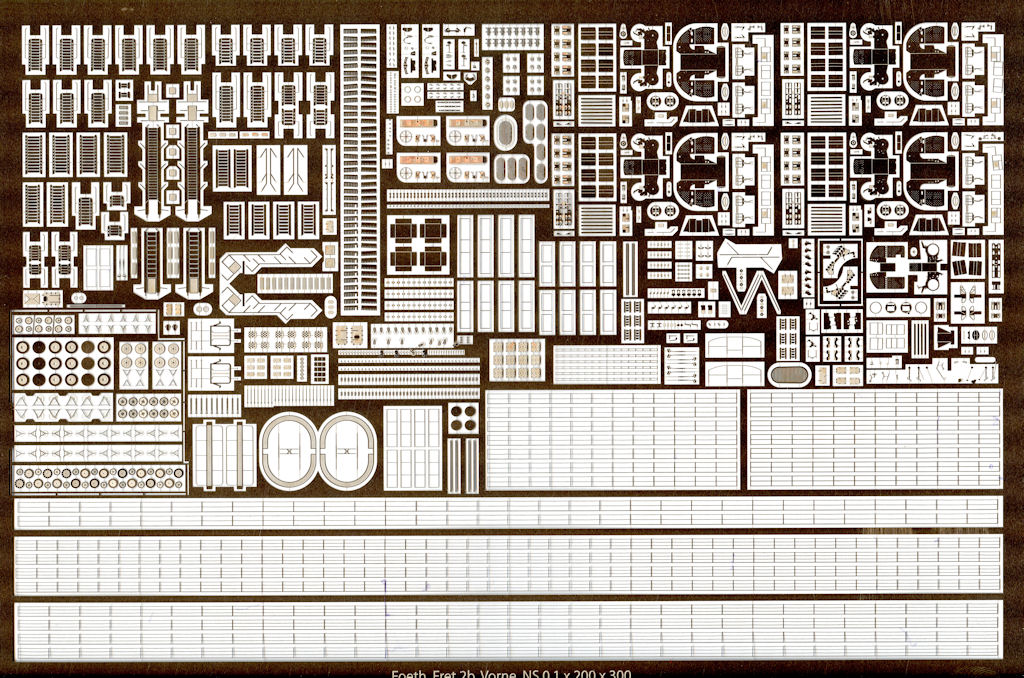
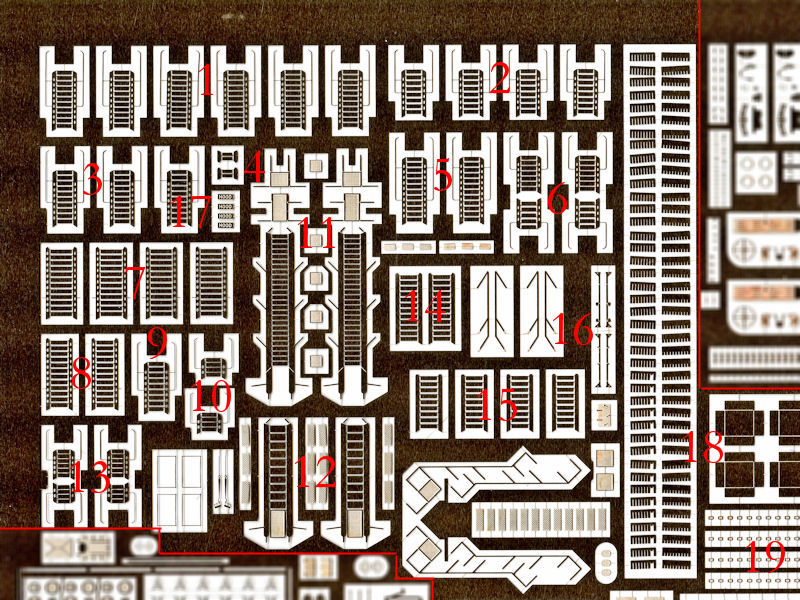
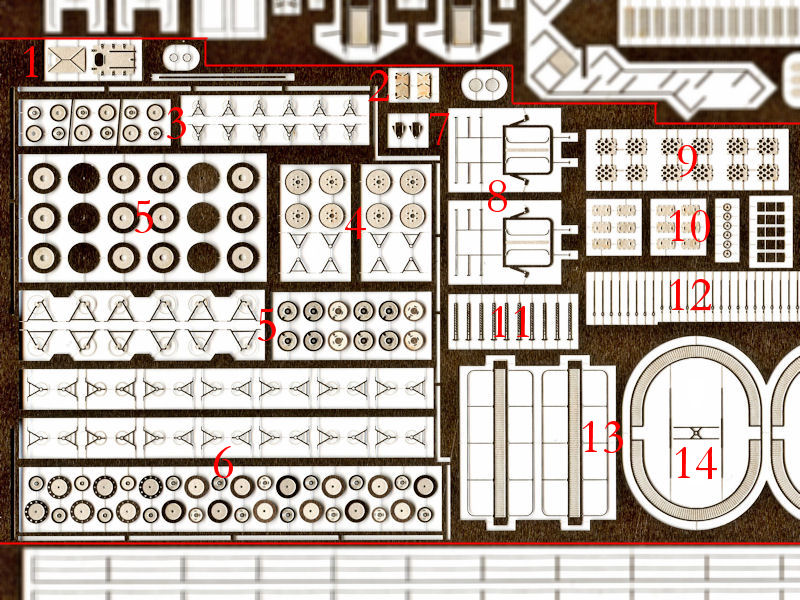
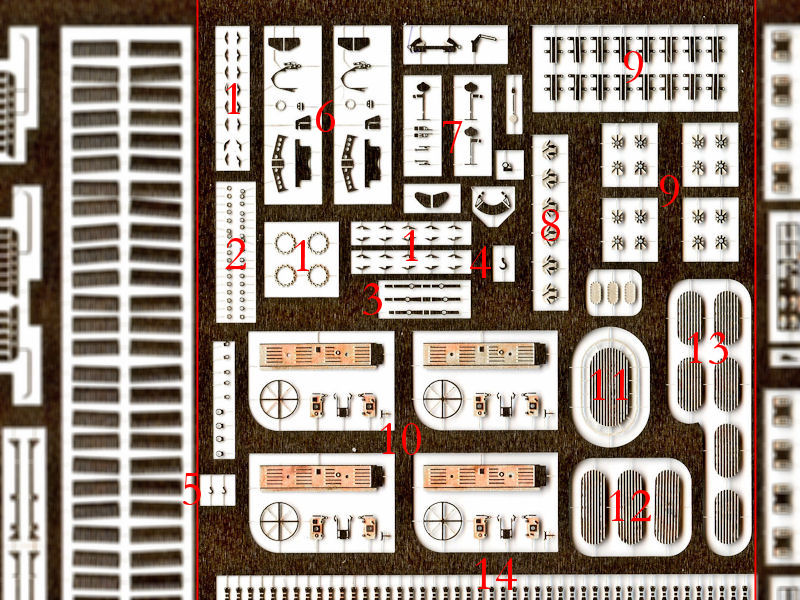
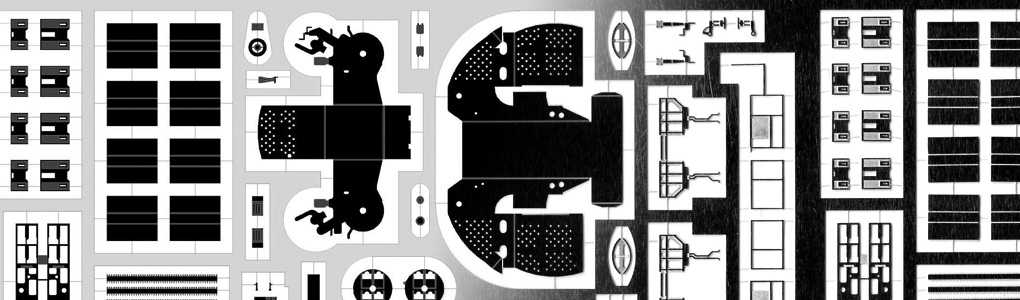
This is the design for the lantern which will be nearly all photoetch except for a small disk to close the part off. I couldn’t add all the required detail in a double-layer part, so I made three additional part to be glued onto the main part. The two parts for the side will be aligned using some rod, the top part will be aligned using the small square visible in the middle of the main part. Should be a nice folding exercise!

Go on to part II.

Copyright © 2025 On The Slipway

Theme by Anders NorenUp ↑